
Cam Carriers Are the New Head Gasket
If you’ve been familiar with Subarus long enough, you may have noticed that several models from the decade up to the early 2010s seemed to be plagued with bad head gaskets. This was a manufacturing defect that eventually caused significant oil leakage into the engine and would eventually fail completely into the higher mileages.
Those days may be behind us, but another issue has become apparent with newer models. Cam carrier oil leaks are now one of the most common major oil seepage related repairs. So common that it feels a bit like déjà vu.
In this article you’ll learn what cam carriers are, why they leak, why repairs can be so pricey, and how to be proactive as a Subaru owner to protect your engine in the long term.
Out with the old(Head Gaskets)
Older Subaru engines, in particular the EJ-series that were used across many models, head gasket failure became a well-known issue. Whether you owned an Impreza, Forester, or Outback from the period you’d run into the same issue. It would often start as a slow leak that was hardly noticeable until it eventually burned off so much oil that you’d have to top it off every thousand miles or less. The issue could also cause coolant leaks that resulted in repeated overheating and causing warping and leading to total failure.
The issues resulted from Subarus use of a single-layer graphite coated gasket that would degrade over time especially around the 130k-150k miles mark. This was compounded by several design choices such as a ground wire that would end up sending current through coolant fluids corroding the seal over time and excessive internal engine pressure relative to cylinder wall thickness.
Allowing this kind of leaking would result in damage to the various components of the engine as oil and coolant found their way into places they shouldn’t. Oil leaks can damage ignition systems and significantly shorten the lifespan of the catalytic converter. Coolant system failures can warp the engine and require highly laborious grinding down of metal to resurface the gasket seating. The theme here is that a small leak inevitably turns into a very expensive problem if ignored. We like to assess these on an individual basis as many times we do tell people the leaks are not severe enough to need fixed yet.
In with the new (Cam Carriers)
What is a cam carrier anyway?
On newer Subaru boxer engines, the cam carrier is a major component that supports the camshafts and makes up part of the surface that seals the engine’s cylinder head assembly.
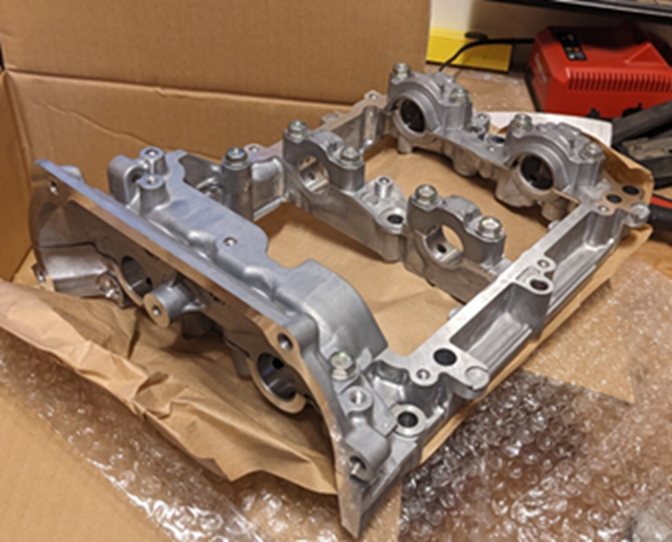
Example of the cam carrier body component of an engine block
Important info for owners
Cam Carriers are sealed with liquid sealant that forms a gasket like structure in place rather than a traditional replaceable gasket. Subaru service guidance describes diagnosing the issue of seepage/leaking and reseal by removing it, doing a thorough cleaning of surfaces and reapplying the specialized liquid sealant.
What problems does a leaky cam carrier seal create?
1) Operating the engine with low oil:
Over time, normal wear and tear from heat cycling and age can degrade these seals and start to seep oil. This can become a leak without much warning and result in the owner unknowingly operating the vehicle under low oil conditions. Over time this can cause unnecessary and significant wear to the engine.
2) Oil and dirt build up can make other engine problems harder to spot:
As oil seepage continues to build up on the exterior of the engine, dirt will start to adhere to the surface and cause a mess that can obscure other components from visual inspection. Having poor vision of the engine can make a mechanics job much harder, increasing labor costs and (worst case) result in them missing critical issues that would otherwise be easy to detect.
3) Collateral damage:
As oil spreads, it contaminates nearby components and can create symptoms that are seemingly unrelated to the cam carrier seal. Oil can drip onto components such as hoses and electrical connections, causing them to degrade. It can also drip onto the exhaust manifold causing an unpleasant and hazardous burning smell and can potentially damage the engines O2 sensor triggering check engine lights and poor acceleration.
Subaru’s maintenance guidance notes that seepage may appear in areas that are not the true origin of the problem. If you don’t address the originating source of the leak, you can end up with costly repairs that may need to be repeated once you’ve fixed the main culprit. Ultimately, what starts as a minor issue can become a major cascade of issues that could have been prevented.
What do leaks look like?
Most owners don’t discover cam carrier leaks because of a sudden break down. They discover it due to one of a few things:
Burning Oil Smell
Small drips or residue under the engine
Wet oil on the engine block or other components upon visual inspection
Low oil levels between the normal oil change interval
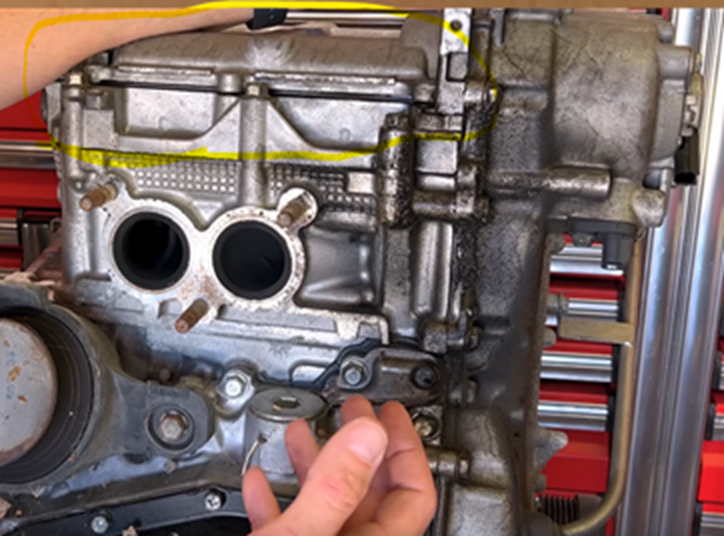
Example of a leaky cam carrier seal: Notice the cam carrier highlighted in yellow and the oil buildup below to the right
Why cam carrier leaks can be expensive
A big reason why cam carriers are the new head gasket has to do with the highly labor-intensive nature of these repairs. Properly resealing a cam carrier is not as simple as applying some adhesive around the joining surface. It involves several steps:
Removing the cam carrier
Thoroughly cleaning the machined surfaces that make the seal
Carefully applying the specified liquid gasket product
Replacing the non-reusable o-rings that sit between the cam carrier and the cylinder head.
This level of disassembly, cleaning and skill application is why shops have to quote these as significant jobs. If not done carefully, the leaks will return.
What sets Suba Rupair apart
Given the amount of labor that goes into this job we always like to go beyond the minimum fix. We also replace:
Upper oil pan o-rings( These are a HUGE problem with newer subarus where they leach oil from the upper oil pan into the cooling system and it can damage cooling system components)
We replace the radiator, unless relatively new, as we frequently see older units with thousands of heat cycles fail after being pulled out of the car during this type of repair.
When we do cam carriers, we will do them without doing upper oil pan o rings at minimum, and although head gaskets are rarely an issue
We will often recommend doing a full reseal on the engine.
What you can do as an owner
Preventative care is essential
Check oil levels consistently: Make routine checks of your oil level a habit, especially if you notice smells or oil spots on the ground.
Don’t ignore that burning smell!: This is a giveaway that oil is leaking onto hot surfaces
Get a diagnosis for the source of the leak: Rather than guessing, get a proper diagnostic done to identify the source and the severity of the leak. Being aware of the situation will help you prepare for the future and avoid unnecessary incident.
Treat a slow leak as a signal for planning: Minor leaks don’t always require immediate repair but they should be accounted for when planning future maintenance of your Subaru. Talk with your mechanic about a plan of action and what degree of the problem should trigger a repair(rate of oil loss, dripping on vital components, spread etc.)
Takeaway:
Cam carrier seal failure is one of the most common oil leak repairs for newer Subaru models. Addressing it early is the best way to protect your vehicle and control costs for maintenance in the long term.
If you think your Subaru may be developing an oil leak, or you’re smelling burning oil and want a second opinion, our shop specializes in Subaru diagnostics and oil leak repair. We can confirm the source, clearly demonstrate the issue and help you decide whether monitoring or proactive resealing makes the most sense for your situation. Our goal is to help you maximize the life of your Subaru and spare your wallet long term.