
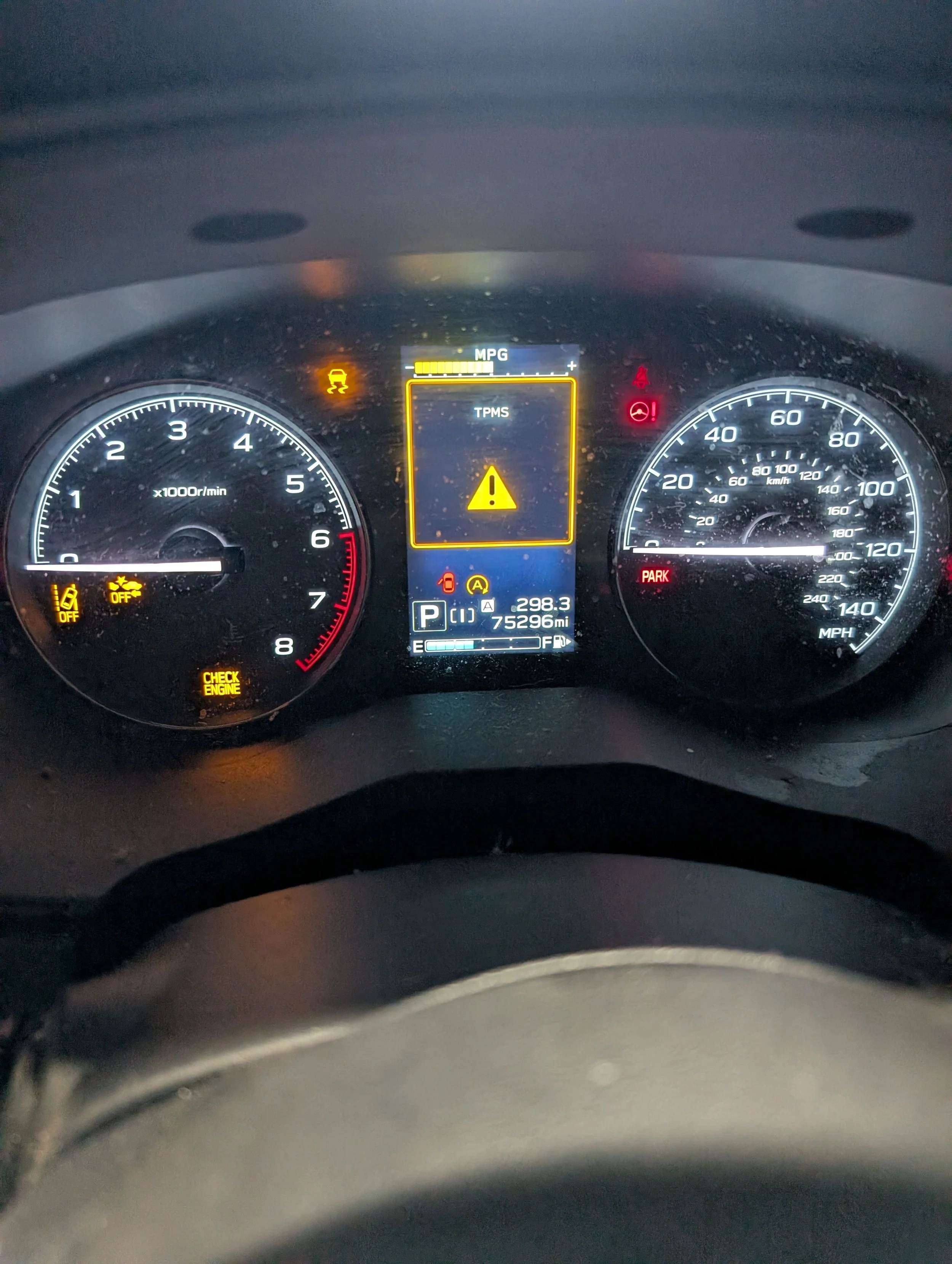
Subaru Check Engine Light Diagnostic in Englewood, CO
A check engine light can mean a lot of different things on a Subaru. Sometimes the car feels completely normal. Sometimes it runs rough, loses power, shifts strangely, or smells different than usual.
Suba Rupair handles Subaru check engine light diagnostics in Englewood, CO for drivers from Denver, Littleton, Lakewood, Sheridan, Glendale, and nearby areas. We start with the codes, but we also look at what the vehicle is doing, when the light came on, and whether the scan data matches the symptoms.
A code reader can give you a number. It usually cannot tell you the whole story.
Quick Answer
Suba Rupair diagnoses Subaru check engine lights, stored trouble codes, emissions codes, misfires, sensor faults, and drivability complaints.
The code is the starting point. We also look at freeze-frame data, current and pending codes, readiness monitors, live readings, recent repair history, and symptoms like rough running, poor acceleration, fuel smell, overheating, or unusual shifting.
If the check engine light is flashing, the vehicle should be checked right away. A flashing light can point to an active misfire, which can damage the catalytic converter if the car keeps being driven.
Call or text Suba Rupair to schedule a Subaru check engine light diagnostic.
A Trouble Code Is a Clue
One of the most common mistakes we see is treating the code like the diagnosis.
A parts-store scan might show an oxygen sensor code, a catalyst efficiency code, a misfire code, or a fuel trim code. That does not automatically tell you which part failed.
For example, an oxygen sensor may be reporting a problem caused by an exhaust leak, fuel mixture issue, wiring problem, or engine performance issue. A catalytic converter code may involve the converter, but it can also be affected by misfires, oil consumption, sensor readings, or exhaust leaks.
The code tells us where to start looking. It does not always tell us where to stop.
Common Subaru Check Engine Light Causes
Subaru check engine lights can come from several systems.
We commonly see codes related to:
misfires
oxygen sensors or air/fuel sensors
catalytic converter efficiency
evaporative emissions leaks
loose or faulty gas caps
mass airflow sensor readings
vacuum leaks
fuel trim problems
ignition coils or spark plugs
coolant temperature concerns
transmission-related faults
wiring or connector issues
Some codes are simple. Others need more testing before the repair is clear.
What We Check During a Check Engine Light Diagnostic
The right diagnostic steps depend on the code and the symptoms.
Depending on what the Subaru is doing, we may check:
current, pending, and stored trouble codes
freeze-frame data
readiness monitor status
live scan data
fuel trims
misfire counts
sensor readings
visible wiring or connector problems
vacuum leaks
exhaust leaks
fluid condition when relevant
recent repair history
related mechanical symptoms
A Subaru with one stored code and no symptoms is a different situation than one with rough running, multiple warning lights, and a history of recent repairs.
Recently Cleared Codes Are a Red Flag
This is especially important on used Subarus.
A check engine light being off does not always mean the car has no issues. If codes were recently cleared, the dashboard may look clean for a while even though the underlying problem has not been fixed.
During pre-purchase inspections, we pay attention to readiness monitors and signs that codes were recently cleared. Sometimes there is an innocent reason. Other times, it can mean a seller is trying to hide a problem until after the sale.
A clean dashboard is helpful. A clean scan with complete readiness monitors tells us more.
Solid Light vs. Flashing Light
A steady check engine light means the car has detected a fault and should be checked. It may or may not be urgent depending on how the vehicle is running.
A flashing check engine light is more serious. It often points to an active misfire. If the engine is misfiring badly, unburned fuel can enter the exhaust and damage the catalytic converter.
If your Subaru has a flashing light, rough running, shaking, or strong fuel smell, it is safer to stop driving and contact a shop.
Emissions and Catalytic Converter Codes
Catalytic converter and emissions codes are common reasons people schedule a check engine light diagnostic.
A P0420-style catalyst efficiency code may point toward the catalytic converter, but it does not always mean the converter should be replaced immediately. Exhaust leaks, oxygen sensor behavior, misfires, fuel trim issues, and oil consumption can all affect the diagnosis.
If the concern turns out to be mainly a catalytic converter or emissions issue, the Subaru catalytic converter diagnosis and repair page may be the better next step.
Misfires and Rough Running
Misfire codes should not be ignored, especially if the Subaru is shaking, running rough, or flashing the check engine light.
Misfires can come from spark plugs, ignition coils, fuel issues, compression problems, vacuum leaks, timing concerns, or other engine problems. Some misfires are straightforward. Others need more testing.
If the vehicle is running poorly, we treat that differently than a stored misfire code with no current symptoms.
Transmission-Related Codes
Some Subaru check engine lights are tied to transmission or drivetrain behavior. A driver may notice harsh shifting, delayed engagement, warning lights, or limp-mode behavior.
If scan data points toward the transmission, the next step may be a Subaru transmission diagnostic rather than a general engine repair. The code helps point us in the right direction.
Head Gasket or Cooling-Related Warning Signs
A check engine light may also appear alongside overheating, coolant loss, misfire-like symptoms, or temperature-related data.
That does not automatically mean head gaskets, but those symptoms deserve a careful look. If the pattern points toward coolant pressure problems, overheating history, or possible combustion gases in the cooling system, a Subaru head gasket diagnostic may be appropriate.
Why Subaru Experience Helps
Subaru check engine lights can overlap with emissions problems, oil consumption, misfires, cooling issues, transmission behavior, and wiring problems.
Because Suba Rupair works on Subarus every day, we are used to looking at the code in context. We know when a code is likely pointing to a common Subaru failure pattern and when it needs more testing before anyone should replace parts.
Schedule a Subaru Check Engine Light Diagnostic
If your Subaru’s check engine light is on, flashing, recently cleared, or tied to rough running, poor acceleration, shifting issues, or emissions concerns, Suba Rupair can inspect it and explain what we find.
We provide Subaru check engine light diagnostics in Englewood, CO for drivers throughout Denver, Littleton, Lakewood, Sheridan, Glendale, and the surrounding metro area.
Call, text, or use our contact form to schedule a Subaru check engine light diagnostic.
Frequently Asked Check Engine Light Questions
-
It depends on how the vehicle is running. A steady light may not require immediate towing, but it should still be checked. A flashing check engine light is more serious and can point to an active misfire.
-
No. A trouble code points to a system or condition. It does not always identify the failed part. Scan data, symptoms, testing, and inspection help confirm the cause.
-
If the underlying problem was not fixed, the light can return after the vehicle completes enough driving cycles. Recently cleared codes can also leave readiness monitors incomplete for a while.
-
Yes. Catalytic converter efficiency codes may be related to the converter itself, but they can also be affected by exhaust leaks, oxygen sensor issues, misfires, fuel mixture problems, oil consumption, or other engine concerns.
-
A flashing check engine light often means the engine is actively misfiring. Continuing to drive can damage the catalytic converter, so it is better to stop driving and contact a shop.
-
Yes. Depending on the issue, we can inspect related warning lights and symptoms involving drivability, emissions, electrical systems, transmission behavior, and other Subaru-specific concerns.