
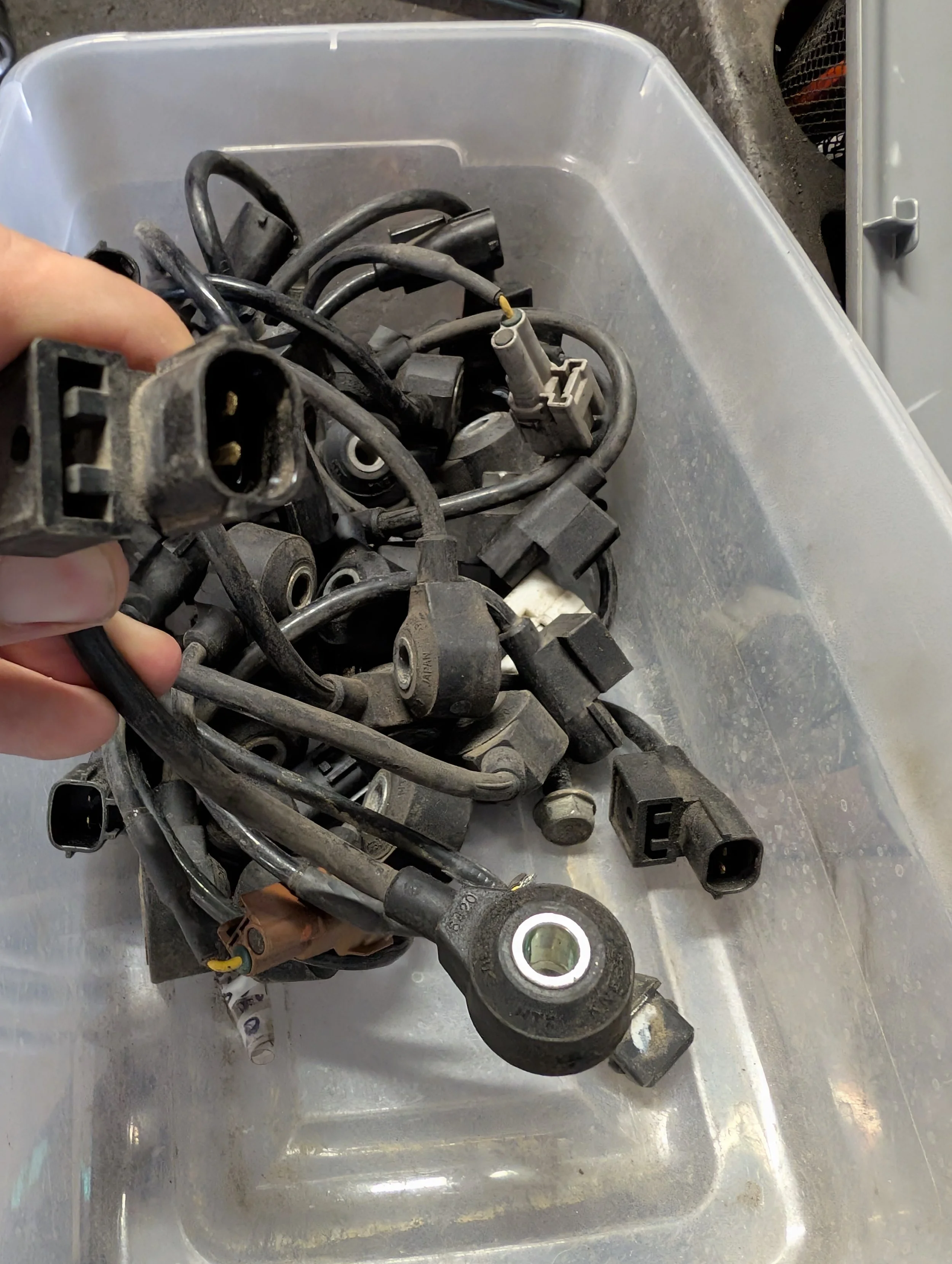
Subaru Sensor Diagnosis & Replacement in Englewood, CO
At Suba Rupair, we look beyond the code itself and pay attention to scan data, symptoms, operating conditions, and circuit behavior before recommending replacement. Sometimes the sensor has failed. Other times the sensor is accurately reporting a problem somewhere else in the system.
We commonly see issues that initially look like sensor failures but turn out to be caused by intake leaks, exhaust leaks, wiring problems, oil contamination, coolant issues, airflow problems, or engine performance concerns. Replacing parts too quickly can add cost while leaving the original problem unresolved.
Quick Answer
Suba Rupair diagnoses and replaces Subaru sensors when testing points to the sensor, wiring, connector, or related system as the source of the problem.
Common sensor-related issues involve mass airflow sensors, oxygen sensors, air-fuel ratio sensors, oil level sensors, coolant temperature sensors, camshaft sensors, crankshaft sensors, and other engine or emissions sensors.
If your Subaru has a check engine light /warning light, rough running, hesitation, poor acceleration, fuel economy changes, emissions codes, or a sensor-specific trouble code, we can inspect the system and explain what the data suggests before recommending replacement.
Call or text Suba Rupair to schedule Subaru sensor diagnosis or replacement.
Common Subaru Sensor Problems
Sensor related problems don’t always show up the same way and can require a process of deduction. The vehicle can still drive normally and only sets a warning light or the symptoms can be noticeable enough where the car feels difficult to drive or drives differently depending on temperature or under different loads.
Some of the most common symptoms that point to a sensor or related component problem:
Check engine light
Sensor-related trouble codes
Rough idle
Hesitation or poor acceleration
Stalling
Hard starting
Poor fuel economy
Rich or lean conditions
Oil level warnings
Temperature-related concerns
Emissions-related codes
Transmission or drivability complaints in some cases
The symptoms alone do not automatically identify which part has failed. The same symptom can sometimes be caused by a sensor, wiring issue, air leak, fuel problem, engine condition, or another system entirely.
Details help. Knowing whether the symptom happens only when cold, under load, during acceleration, after refueling, or after the engine reaches operating temperature can make diagnosis faster and more accurate.
A Sensor Code Does Not Always Mean the Sensor Is Bad
Seems like an obvious fix at first glance, however, this is one of the most common misunderstandings with check engine light diagnosis.
Many codes mention a specific sensor, but that does not automatically mean the sensor itself has failed. In some cases, the sensor is doing its job and reporting a problem somewhere else in the system.
That is why we try not to recommend replacement based on the code description alone.
When diagnosis points toward a sensor, we compare the fault code with scan data, operating conditions, symptoms, and the surrounding systems before deciding what should happen next.
For example, a mass airflow sensor code may be caused by a dirty sensor, intake leak, wiring issue, airflow restriction, or an engine performance concern affecting the reading.
An oxygen sensor code may point toward the sensor itself, but exhaust leaks, fuel trim concerns, misfires, oil consumption, or catalytic converter issues can sometimes change how the data appears.
The goal is not to replace the part named in the code. The goal is to understand why the code set in the first place.
Mass Airflow Sensor Diagnosis
Mass airflow (MAF) sensors come up often because they can affect how the engine calculates airflow and fuel delivery. When the data becomes inaccurate, the symptoms can look very different from one vehicle to another.
A Subaru with a MAF-related failure may have:
Rough idle
Hesitation or poor acceleration
Hard starting
Poor fuel economy
Rich or lean conditions
Check engine light
Symptoms that become more noticeable under load
One thing that makes MAF diagnosis tricky is that the sensor itself is not always the failure point.
We may see airflow readings affected by contamination on the sensor element, intake leaks after the sensor, wiring concerns, restricted airflow, aftermarket intake components, or engine conditions that change the expected airflow values.
Cleaning the sensor can help in some situations if contamination is affecting the reading, but cleaning is not a repair strategy by itself. If the sensor data still does not make sense after inspection and testing, replacement may be the better path
Oxygen Sensors and Air-Fuel Ratio Sensors
Oxygen sensors and air-fuel ratio sensors help the engine computer understand what is happening in the combustion and exhaust process. The information they provide influences fuel trim adjustments, emissions behavior, catalytic converter monitoring, and how the engine adapts while running.
A Subaru may need oxygen sensor or air-fuel ratio sensor testing based on:
Emissions-related codes
Fuel trim concerns
Poor fuel economy
Catalyst efficiency codes
Rough running
Slow or inconsistent sensor response
Sensor heater circuit codes
Failed emissions testing
These sensors are often blamed quickly because the fault code may point directly at them. In reality, the sensor data is only one piece of the picture.
Exhaust leaks, fuel delivery concerns, misfires, oil consumption, wiring issues, catalytic converter problems, or engine conditions can all influence the readings and make the results look misleading.
That is why we prefer to look at the sensor data in context before recommending replacement.
Oil Level Sensors
Oil level sensor concerns are different from oil pressure concerns and different from actual oil consumption. The warning message may mention oil, but understanding which condition is present matters before deciding what to repair.
If a Subaru reports an oil level concern, the first step is usually verifying the actual oil level rather than assuming the sensor failed.
From there, we may look at recent service history, visible leaks, oil consumption patterns, sensor data, wiring condition, and whether the symptoms match what the vehicle is reporting.
This matters because low oil can become serious quickly if the warning is ignored.
We see some Subaru boxer engines become heavier oil consumers as mileage increases, and we do not want to dismiss an oil warning as “just a sensor” until the basics make sense.
Coolant Temperature Sensors
Coolant temperature sensors affect impact numerous systems. The engine computer uses that information to help manage fuel delivery, cold-start behavior, idle characteristics, cooling fan operation, and overall engine strategy.
When the reported temperature does not match actual engine conditions, the symptoms can sometimes feel unrelated to temperature which throws people off.
A coolant temperature concern may show up as:
Hard starting
Rough idle
Poor fuel economy
Temperature-related trouble codes
Cooling fan behavior that seems unusual
Temperature readings that do not match actual engine conditions
Driveability concerns during warm-up
Temperature-related symptoms do not automatically mean the sensor failed.
Low coolant level, thermostat concerns, trapped air, cooling system problems, fan operation issues, previous overheating events, or wiring concerns can sometimes create symptoms that look similar.
We want the temperature reading to make sense alongside the vehicle’s actual operating conditions before recommending replacement.
Camshaft and Crankshaft Position Sensors
Camshaft and crankshaft position sensors help the engine computer understand engine position and timing while the vehicle is running. Because these signals are so important, problems here can sometimes create more noticeable symptoms than other sensor concerns.
A Subaru with camshaft or crankshaft sensor issue may present:
No-start conditions
Stalling
Extended crank time before starting
Intermittent starting concerns
Misfire-like behavior
Timing-related trouble codes
Check engine light
One thing that makes these concerns difficult is that failures are not always consistent.
We occasionally see vehicles that act normally once they arrive at the shop, especially if the symptom only appears after heat soak, after extended driving, after sitting overnight, or under specific operating conditions.
Details help. If the vehicle only stalls when warm, restarts after cooling down, cranks longer after sitting, or behaves differently hot versus cold, those observations can make diagnosis more efficient and reduce unnecessary parts replacement.
Wiring and Connector Problems
Sometimes the sensor is not the problem at all. The issue may be the circuit that supports it, ie the wiring or connector.
Heat, age, corrosion, oil contamination, poor previous repairs, or loose connectors can all affect sensor readings. A sensor can be replaced and the same code can come back if the circuit problem is still there. In the Denver area and, our guess, most urban areas we frequently see rodent droppings and signs they have chewed through wiring insulation. Subarus frequently used a soy based polymer for these insulations which is appealing to small animals.
We occasionally see situations where a sensor has already been replaced but the original code returns because the wiring concern was never corrected.
When the symptoms, stored codes, and sensor data do not agree with each other, we step back and look at the wiring and connector side before assuming another new part is the answer.
Sensor Diagnosis vs. Check Engine Light Diagnostic
Sensor diagnosis and check engine light diagnosis overlap, but they are not always the same starting point.
Check engine light diagnosis is the broader process. It may involve warning lights, stored fault codes, emissions concerns, drivability problems, misfires, or situations where the source of the problem is still unclear.
Sensor diagnosis becomes more useful when the symptoms, previous testing, stored codes, or scan data already point toward a sensor, sensor circuit, or a system that relies on sensor input.
In some cases, what looks like a sensor concern turns out to be something else entirely. In other cases, a warning light investigation eventually narrows down to a sensor or wiring problem.
If the issue is still broad or uncertain, start with check engine light diagnostic. If the concern already appears to involve a sensor or sensor-related system, this page is the better fit.
Sensor Replacement vs. Cleaning
Some sensors can be cleaned in certain situations, but cleaning is not a universal fix for sensor-related problems.
Mass airflow sensors are the most common example where cleaning may help if contamination is affecting the reading. In those cases, restoring the sensor surface can sometimes bring the data back into range.
However, cleaning will not correct a failed sensor, damaged wiring, intake leaks, connector issues, or engine conditions that are influencing the readings.
Because of that, cleaning should be treated as a diagnostic step rather than a repair by itself. If the sensor data does not improve after cleaning and inspection, further testing or replacement may be necessary. We often see sensors that are in an intermediate stage where they are failing but not completely and after cleaning they will begin to work again for a time before eventually throwing codes or causing problems again.
The key is whether the sensor signal changes in a meaningful way after cleaning and verification.
Why Subaru Experience Helps
Subaru sensor issues are not always isolated problems. On these platforms, sensor codes can overlap with airflow issues, exhaust leaks, oil consumption, vacuum leaks, cooling system behavior, and wiring or connector concerns that develop over time.The same code can mean different things depending on how the engine is actually running and how the sensor data behaves in context.
Experience with Subaru systems helps narrow those possibilities more effectively. Over time, certain patterns become more recognizable or obvious. For example, how intake leaks can affect airflow readings, how exhaust leaks can influence oxygen sensor data, or how intermittent wiring concerns can create misleading or inconsistent signals.
Sometimes the sensor is the failure but often its reporting a problem somewhere else in the system.The goal is to understand which situation applies before replacing parts.
Schedule Subaru Sensor Diagnosis or Replacement
If your Subaru has a check engine light, sensor code, drivability issue, or warning that may involve a sensor or sensor-related system, we can inspect the data and explain what is actually happening before recommending repairs.
The goal is to identify whether the issue is coming from the sensor itself, the wiring or connector, or another system that is influencing the readings.
Call, text, or use our contact form to schedule Subaru sensor diagnosis or replacement.
Frequently Asked Sensor Diagnostic and Replacement Questions
-
No. A sensor code may mean the sensor has failed, but it can also point to wiring, connectors, leaks, fuel trim problems, exhaust issues, or another system causing the sensor reading to look wrong.
-
A bad or dirty MAF sensor may cause rough idle, hesitation, poor acceleration, stalling, hard starting, poor fuel economy, lean codes, rich codes, or a check engine light.
-
Sometimes. Cleaning can help if the MAF sensor is dirty but still working. It will not fix a failed sensor, wiring problem, intake leak, or engine issue affecting airflow readings.
-
The sensor may not have been the root cause. Exhaust leaks, wiring problems, misfires, fuel mixture issues, catalytic converter problems, or oil consumption can all affect oxygen sensor readings.
-
Yes, when testing points to the oil level sensor or related circuit as the problem. We still check the actual oil level first because low oil should not be ignored.
-
Yes, some sensors can contribute to no-start or long-crank symptoms, especially crankshaft or camshaft position sensors. Battery, starter, fuel, ignition, and wiring issues can also cause similar symptoms.