
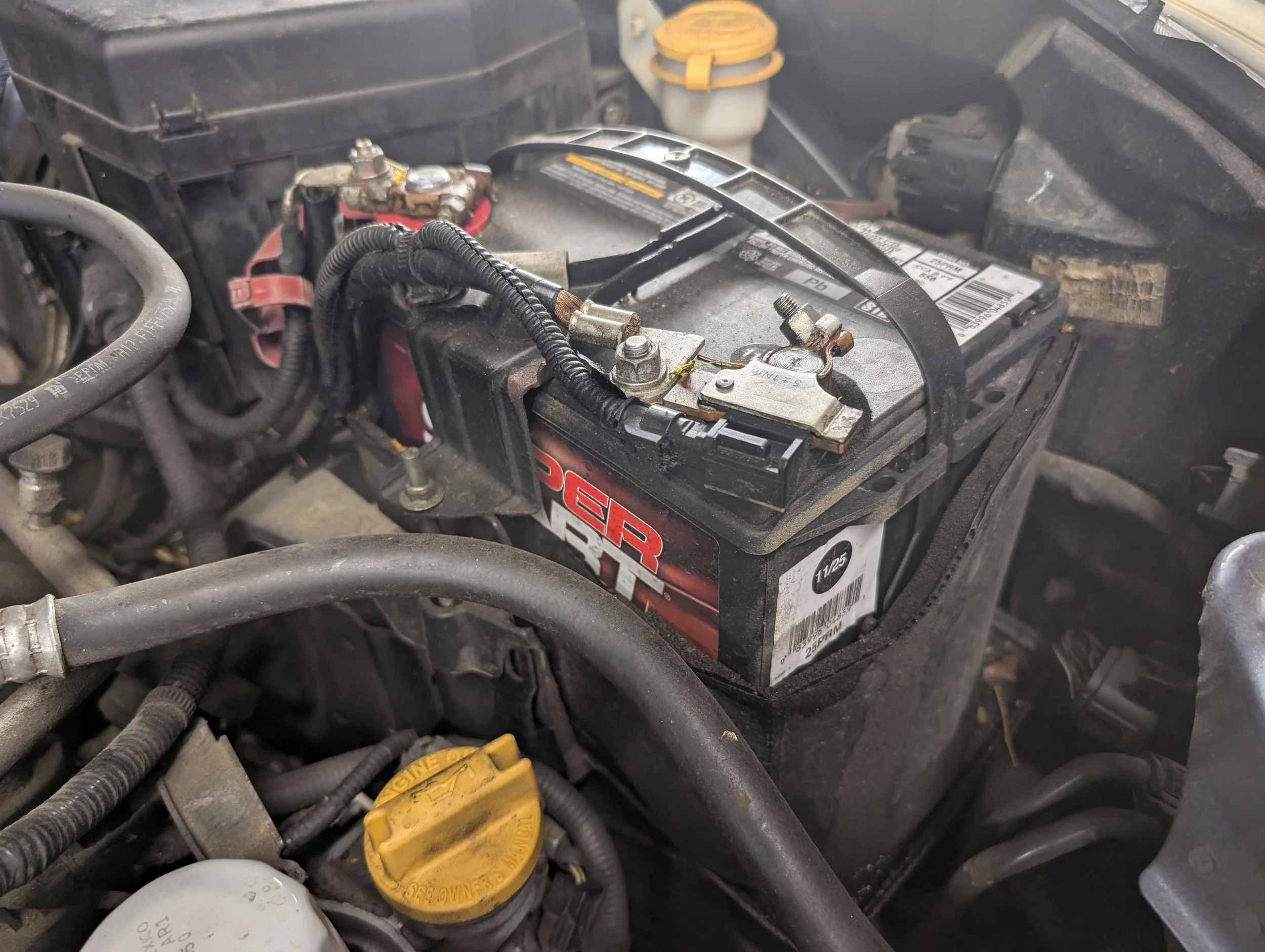
Subaru Battery Testing & Replacement in Englewood, CO
A weak battery usually gives you a warning before it leaves you stranded. The engine cranks a little slower. The car needs a jump. Maybe it starts fine one day and struggles the next cold morning.
Suba Rupair tests and replaces Subaru batteries in Englewood, CO for drivers from Denver, Littleton, Lakewood, Sheridan, Glendale, and nearby areas. If your Subaru is slow to start, clicking when you turn the key, or needing jump-starts, we can check the battery and charging system before you get stuck somewhere inconvenient.
Battery problems are common, but not every no-start is just a battery. Loose terminals, corrosion, alternator issues, starter problems, cable problems, or a parasitic draw can create similar symptoms.
Quick Answer
Suba Rupair tests and replaces Subaru batteries when they are weak, dead, failing under load, or no longer holding a charge.
Common signs include slow cranking, clicking when trying to start, repeated jump-starts, dim lights, battery corrosion, or trouble starting after the car sits.
If the battery tests fine but the problem keeps happening, we may need to look at the charging system, starter, connections, or a broader electrical issue.
Call or text Suba Rupair to schedule Subaru battery testing or replacement.
Signs Your Subaru Battery May Be Failing
Battery problems often start small.
You may notice:
slow cranking
clicking when trying to start
the car will not start
repeated jump-starts
dim lights before startup
corrosion around the battery terminals
trouble starting after sitting overnight
starting problems in cold weather
electrical accessories acting weak
a battery warning light
a battery that is more than a few years old
If your Subaru has already needed more than one jump-start, it is worth testing the battery instead of waiting for the next no-start.
Battery Testing Before Replacement
We prefer to test the battery before replacing it. Sometimes the battery is clearly worn out. Other times, the battery is only part of the story.
During battery service, we may check:
battery voltage
how the battery performs under load
battery age and condition
terminal corrosion
cable condition
battery hold-down condition
alternator output when relevant
signs that something is draining the battery
starter behavior if the car clicks or cranks slowly
That helps avoid replacing a battery when the real problem is a loose connection, charging issue, or electrical draw.
Slow Cranking and Clicking When Starting
Slow cranking is one of the most common signs of a weak battery. The engine turns over, but it sounds lazy or labored, especially after sitting overnight or during cold weather.
Clicking can also point to a battery problem, but it can come from other places too. A weak connection, corroded terminal, starter issue, or cable problem may create a similar sound.
If the car is clicking or struggling to crank, we start with the battery and connections before assuming a bigger repair.
Corrosion and Loose Battery Terminals
A battery can test okay and still cause problems if the terminals are corroded or loose.
Corrosion can block current flow and create symptoms that feel like a bad battery. Loose terminals can also cause intermittent starting issues, especially if the problem only happens sometimes.
When we check the battery, we also look at the terminals and cables. Sometimes cleaning up the connection is part of getting the starting system working reliably again.
Charging System Concerns
A good battery will not stay charged if the charging system is not doing its job.
If the alternator is weak, the belt is slipping, or the charging circuit has a problem, the battery may keep going dead even after it has been replaced. That is why repeated dead batteries or jump-starts deserve a closer look.
If the battery tests bad, replacement may solve the problem. If the battery tests good but keeps dying, we may need to check the alternator, cables, or possible parasitic draw.
Colorado Weather and Battery Life
Colorado weather can be hard on car batteries. Cold starts, big temperature swings, short trips, and long periods of sitting can all expose a weak battery.
A battery that seemed fine in warm weather may struggle when temperatures drop. If your battery is getting older or the car has started cranking slower, testing it before winter can save you from a bad morning.
Battery Replacement vs. Electrical Diagnosis
Battery replacement is the right move when the battery itself is weak or failing. A broader electrical diagnostic makes more sense when the battery keeps dying, the vehicle still will not start with a good battery, or multiple electrical systems are acting strangely.
If the main concern is a weak battery, slow crank, or repeated jump-start, battery testing is the place to start. If the test results point beyond the battery, we will explain what should be checked next.
Schedule Subaru Battery Testing or Replacement
If your Subaru is slow to start, needs jump-starts, has battery corrosion, or will not start reliably, Suba Rupair can conduct an inspection to test the battery and explain the next step.
We provide Subaru battery testing and replacement in Englewood, CO for drivers throughout Denver, Littleton, Lakewood, Sheridan, Glendale, and the surrounding metro area.
Call, text, or use our contact form to schedule Subaru battery service.
Frequently Asked Battery Maintenance Questions
-
Most car batteries last about 3 to 5 years. Battery life depends on driving habits, weather, battery quality, and how often the vehicle sits. Colorado temperature swings, short trips, and cold starts can shorten battery life.
-
Common signs include slow cranking, clicking when starting, repeated jump-starts, dim lights, terminal corrosion, or trouble starting after the car sits. Battery testing can confirm whether the battery is weak or failing.
-
Yes. Low voltage or battery problems can sometimes trigger warning lights or unusual electrical behavior. If warning lights remain after the battery issue is addressed, further diagnosis may be needed.
-
A battery may keep dying because it is old or weak, but it can also happen if the alternator is not charging properly, there is a parasitic draw, the terminals are loose or corroded, or another electrical issue is draining the battery.
-
Testing helps determine that. A weak battery may fail under load, while an alternator problem may prevent the battery from charging properly while the engine is running.
-
If the battery is older, tests weak, or your Subaru is already cranking slowly, replacing it before cold weather can help prevent no-start problems.