
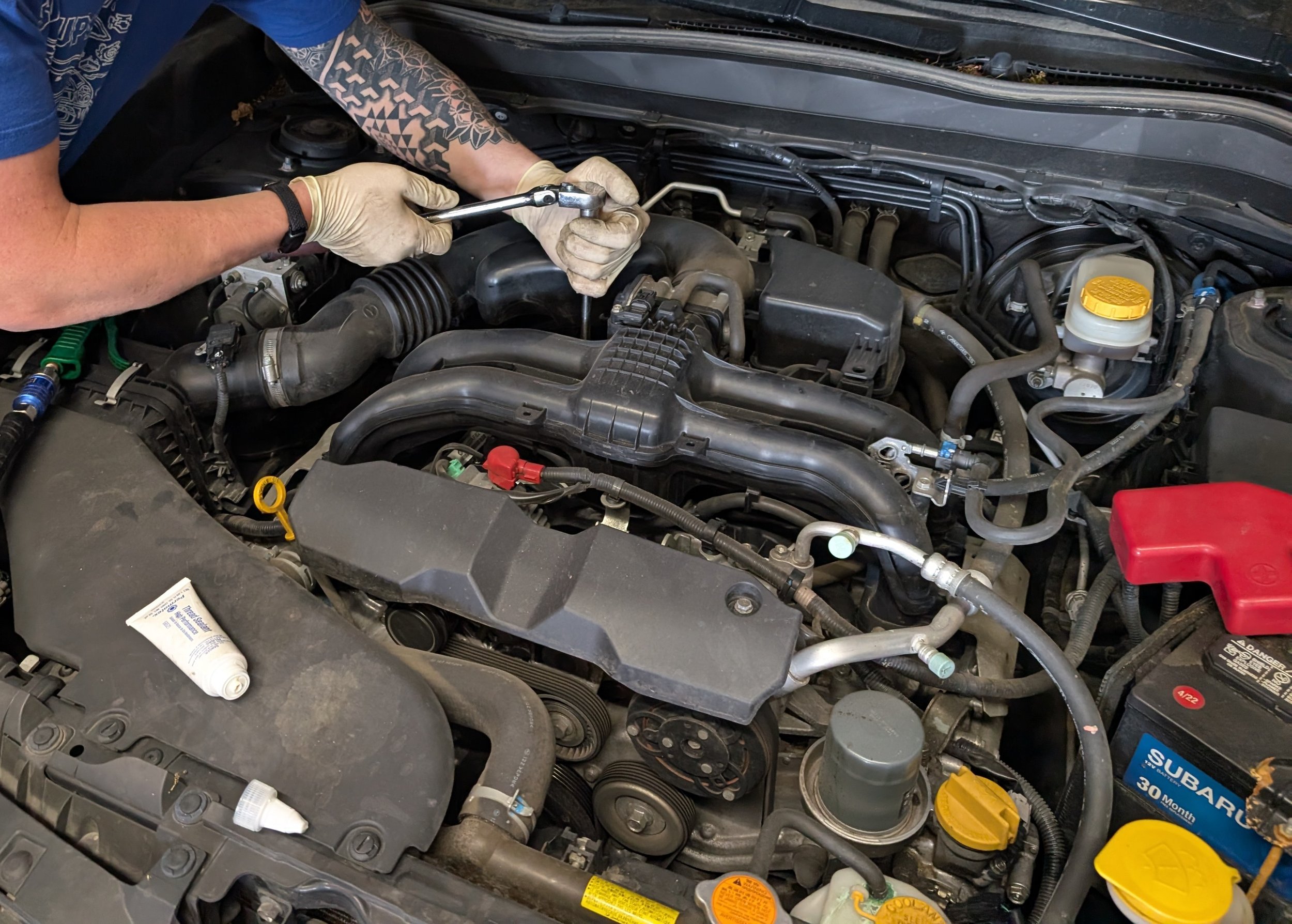
SubSubaru PCV Valve & PCV Connector Service in Englewood, CO
The PCV valve is a small part, but we pay attention to it because it can affect a lot more than people expect.
Suba Rupair services Subaru PCV valves and PCV connectors in Englewood, CO for drivers from Denver, Littleton, Lakewood, Sheridan, Glendale, and nearby areas. We often look at the PCV system when a Subaru has oil consumption, rough idle, fuel-smelling oil, lean codes, vacuum leak symptoms, or oil leak concerns.
In our experience, many Subaru PCV valves start to function poorly around 60k miles. That does not mean every symptom is caused by the PCV valve, but it is one of those small maintenance items that can cause compound other issues when it gets ignored.
Quick Answer
Suba Rupair inspects and replaces Subaru PCV valves and PCV connectors when they are clogged, stuck, cracked, brittle, leaking, or contributing to engine symptoms.
A PCV problem may show up as oil consumption, rough idle, fuel-smelling oil, lean codes, vacuum leak symptoms, or pressure-related oil leak concerns.
We often recommend checking the PCV system around 60k miles, especially if the vehicle has symptoms or unknown maintenance history.
Call or text Suba Rupair to schedule Subaru PCV valve or PCV connector service.
What the PCV System Does
PCV stands for positive crankcase ventilation. Its job is to help manage pressure and vapors inside the engine.
When the system is working correctly, crankcase vapors are routed and controlled instead of building pressure or contaminating the oil more than necessary. When the PCV valve sticks, clogs, leaks, or fails to regulate flow properly, the engine may start showing symptoms that do not seem obviously connected at first.
The connector and hoses matter too. A brittle or cracked PCV connector can create a vacuum leak and leak coolant and or oil, even if the PCV valve itself is not failing.
Signs We Look for With PCV Problems
PCV issues can be subtle. The car still drives, but something about the idle, oil level, or codes does not make sense.
Some signs we look for include:
oil consumption
rough idle
fuel-smelling oil
lean codes
vacuum leak symptoms
oil leaks or worsening seepage
poor idle quality
brittle PCV connectors
cracked or leaking PCV connections
oil residue around PCV-related parts
drivability complaints that do not point to one obvious cause
Those symptoms can come from other issues too. A PCV check is not a replacement for diagnosis, but it is a small area we do not like to overlook.
Why We Pay Attention Around 60k Miles
We frequently see Subaru PCV valves that are not functioning properly by around 60k miles. Because the part is relatively small and inexpensive compared with the problems it can contribute to, we often bring it up during maintenance conversations.
This is especially true during a 60k service, oil leak inspection, rough idle diagnosis, or oil consumption complaint.
A PCV valve that is not working correctly can affect crankcase pressure and oil vapor control. Over time, that can complicate other issues and make diagnosis harder than it needs to be.
Oil Consumption and Fuel-Smelling Oil
One thing we pay close attention to is oil that smells like fuel.
Fuel in the oil is not something we like to ignore. It can reduce the oil’s ability to protect the engine, and it may contribute to faster deterioration of seals and gaskets. On Subarus, many major engine seals use silicone rather than rubber, and contaminated oil can be hard on those sealing materials.
A PCV problem is not the only possible cause of fuel-smelling oil, but it is one of the things we check when the symptoms line up.
If we think a Subaru has been driven for a while with poor crankcase ventilation or contaminated oil, we may recommend an engine cleaner depending on what we find.
Lean Codes and Rough Idle
We have seen PCV-related issues create symptoms that point people in the wrong direction.
For example, a Subaru may come in with rough idle, oil consumption, or lean codes that seem like they might require a different intake-related repair. In some cases, replacing a PCV valve or repairing a PCV connector has resolved the issue.
That does not mean every lean code is a PCV problem. It does mean the PCV system is worth checking before jumping into larger repairs.
PCV Connector Problems Are Their Own Issue
The PCV valve and PCV connector are related, but they are not the same part.
The valve can stick, clog, or stop regulating flow properly. The connector can crack, get brittle, leak, or fail to seal correctly. A cracked connector can cause a vacuum leak and create drivability symptoms even if the valve is not the only issue. Whenever we work on coolant crossover pipe leaks we always recommend replacing the PCV connector since the work overlaps enough with how frequently we see them leaking.
That is why we inspect the surrounding PCV parts instead of replacing one piece and ignoring the rest of the system.
PCV Problems and Oil Leaks
The PCV system helps control crankcase pressure. When it is not working correctly, pressure-related issues may make oil seepage worse or add stress to aging seals.
Replacing the PCV valve will not magically fix every Subaru oil leak. If oil is already leaking from a cam carrier, valve cover, head gasket area, oil pan, or another seal, that leak still needs to be identified properly.
But PCV condition matters when we are trying to understand engine health. If a Subaru already has oil leak concerns, high oil consumption, or fuel-smelling oil, we do not want to ignore the system that helps manage pressure inside the engine.
PCV Service vs. Other Diagnostics
PCV service is specific. It is not the same as a full check engine light diagnostic, oil leak diagnosis, or engine repair inspection.
If the car has stored codes, warning lights, rough running, or several symptoms happening at once, we may need to look beyond the PCV system. If the main issue is oil spots or burning oil smell, the oil leak source needs to be found. If the concern is mainly routine maintenance around 60k miles, PCV service may fit naturally into that visit.
The symptom decides the starting point.
Schedule Subaru PCV Valve or PCV Connector Service
If your Subaru has oil consumption, fuel-smelling oil, rough idle, lean codes, vacuum leak symptoms, or aging PCV components, Suba Rupair can inspect the system and explain what makes sense.
We service Subaru PCV valves and PCV connectors in Englewood, CO for drivers throughout Denver, Littleton, Lakewood, Sheridan, Glendale, and the surrounding metro area.
Call, text, or use our contact form to schedule Subaru PCV service.
Frequently Asked Questions
-
In our experience, many Subaru PCV valves are not functioning properly by around 60k miles. Replacement may be recommended as preventative maintenance or sooner if symptoms point toward a PCV-related issue.
-
Possible signs include oil consumption, rough idle, fuel-smelling oil, lean codes, vacuum leak symptoms, drivability complaints, or pressure-related oil leak concerns.
-
Yes. The PCV valve regulates crankcase ventilation. The connector and related hoses connect the system. A cracked or brittle connector can create a vacuum leak or affect how the PCV system works.
-
A bad PCV valve can contribute to crankcase pressure problems that may worsen oil seepage or stress aging seals. It does not cause every oil leak, but it is worth checking during Subaru oil leak diagnosis.
-
Yes. PCV valve or connector issues may contribute to lean codes, rough idle, vacuum leaks, or drivability-related warning lights. A check engine light diagnostic can help confirm whether the PCV system is involved.