
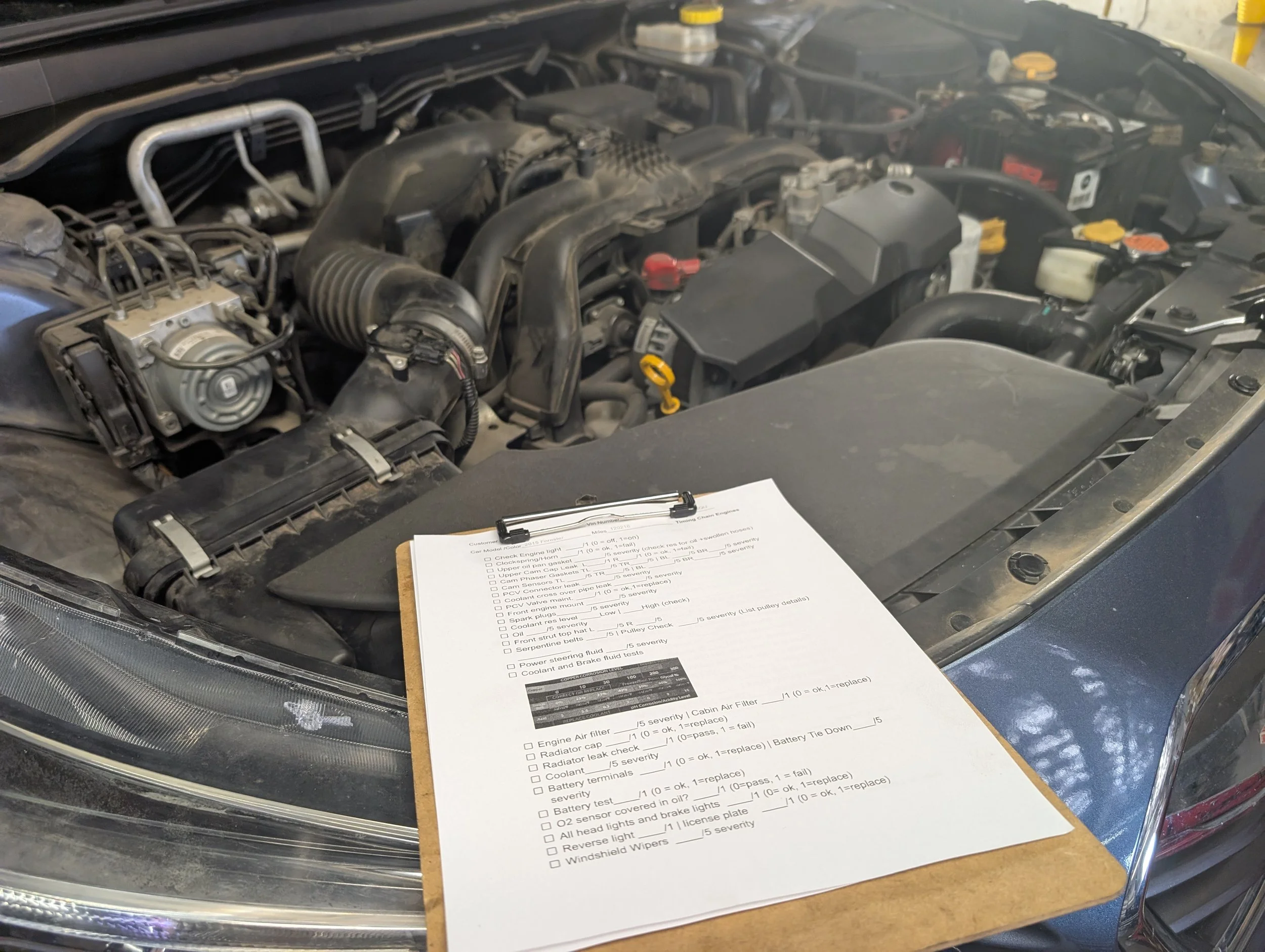
Subaru Vehicle Inspection & Safety Inspection in Englewood, CO
Sometimes you just want to know where your Subaru stands.
Maybe you are planning a road trip. Maybe something feels a little off. Maybe the car is getting older and you want to know what needs attention now versus what can wait. That is where a general vehicle inspection can help.
Suba Rupair performs Subaru vehicle inspections and safety inspections in Englewood, CO for drivers from Denver, Littleton, Lakewood, Sheridan, Glendale, and nearby areas. We look over the major safety and maintenance items, explain what we find, and help you prioritize the next steps.
Quick Answer
A Subaru vehicle inspection is a good fit if you already own the car and want a clearer picture of its condition.
We check important safety and maintenance areas such as brakes, tires, steering, suspension, lights, fluids, visible leaks, battery condition, belts, hoses, and other wear items.
If you are buying a used Subaru, schedule a Subaru pre-purchase inspection instead. That inspection is more focused on purchase risk, seller red flags, hidden problems, and repair-cost decisions before you commit.
Call or text Suba Rupair to schedule a Subaru vehicle inspection or safety inspection.
When a Subaru Inspection Makes Sense
A vehicle inspection can be useful even if nothing is obviously broken.
Customers often schedule inspections when:
they are planning a road trip
winter driving is coming up
the car has not been checked in a while
they hear a new noise
the vehicle feels loose, shaky, or different than usual
they recently bought the car and want a baseline
the Subaru is older or higher-mileage
they want help prioritizing repairs
they are not sure what maintenance has been done
they want peace of mind before mountain driving
The point is not to turn every inspection into a repair list. The point is to understand the car.
What We Usually Check
The exact inspection depends on why the vehicle is here, but we commonly look at:
brakes
tires and tire wear
steering components
suspension components
lights
wiper blades
battery condition
belts and hoses
visible oil leaks
visible coolant leaks
other fluid leaks
oil level and condition
coolant level and condition
brake fluid condition
exhaust condition
wheel bearing noise or play
warning lights
underbody concerns
obvious maintenance needs
We will also pay attention to anything you mention when scheduling. If there is a noise, smell, vibration, or warning light, tell us. Those details help us focus the inspection.
Safety Items We Pay Close Attention To
Some problems are more urgent than others. brakes, tires, steering, suspension, and lights are at the top of the list because they affect how the vehicle stops, turns, handles, and keeps you visible on the road.
During a safety-focused inspection, we pay close attention to things like:
brake pad and rotor condition
tire tread and uneven wear
steering looseness
suspension wear
ball joints and tie rods
wheel bearing noise or looseness
exterior lights
wipers
leaks that could affect safety
exhaust leaks or fumes
If something affects safe operation, we will explain it clearly. If something can wait, we will tell you that too.
Brakes, Tires, Steering, and Suspension Work Together
A Subaru that feels unstable does not always have one obvious problem.
A vibration might feel like brakes, but worn suspension parts can make braking feel worse. Uneven tire wear might point to alignment, tire maintenance, or suspension wear. A clunk over bumps might involve bushings, sway bar links, struts, ball joints, or steering components.
That is why a broader inspection can be helpful. We are not just checking one part in isolation. We are looking at how the vehicle behaves as a system.
Fluid Leaks and Maintenance Clues
Inspections are also a good time to catch leaks and overdue maintenance.
Subarus can develop oil leaks, coolant leaks, transmission leaks, differential leaks, and other fluid concerns as they age. Some leaks are minor and worth monitoring. Others are more active and should be repaired sooner, especially if they create smells, smoke, low fluid levels, or safety concerns.
We also look for basic maintenance clues, such as aging fluids, worn filters, weak battery condition, cracking belts or hoses, or signs that scheduled service may be overdue.
Road Trip and Winter Readiness
Colorado driving can be hard on a vehicle, especially if you are heading into the mountains or driving in winter weather.
Before a road trip or winter season, it is worth checking:
tires
brakes
battery
coolant
wipers
lights
leaks
belts and hoses
steering and suspension
fluid levels
warning lights
A quick inspection can catch simple problems before they become a headache on the road.
Vehicle Inspection vs. Pre-Purchase Inspection
A vehicle inspection is usually for a Subaru you already own. It helps you understand safety, maintenance, and repair priorities.
A pre-purchase inspection is different. That is for someone considering a used Subaru before buying it. On those inspections, we pay closer attention to seller red flags, hidden leaks, recently cleared codes, transmission behavior, rust, and repair costs that could affect the purchase decision.
If you are buying a used Subaru, choose the Subaru pre-purchase inspection. If you already own the car and want to know what condition it is in, this vehicle inspection is the better fit.
Vehicle Inspection vs. 30k or 60k Service
A general inspection checks the condition of the vehicle. A 30k or 60k service is a scheduled maintenance package tied to mileage and recommended service intervals.
If your Subaru is close to a major mileage interval, a 30k or 60k service may make more sense because it includes specific maintenance items along with inspection.
If you are not sure which one fits, we can help you decide based on mileage, service history, and what you are trying to accomplish.
Why a Subaru-Focused Inspection Helps
A Subaru inspection is more useful when the shop knows what these cars commonly do as they age.
We see patterns with oil leaks, suspension wear, brake vibration, wheel bearings, PCV issues, cooling system concerns, and drivetrain noises. That experience helps us explain whether something is normal wear, a watch item, or a repair that should move up the priority list.
Our goal is simple: tell you what we see, what matters, and what can wait.
Schedule a Subaru Vehicle Inspection
If you want a clearer picture of your Subaru’s safety, maintenance needs, or overall condition, Suba Rupair can inspect the vehicle and walk you through the findings.
We provide Subaru vehicle inspections and safety inspections in Englewood, CO for drivers throughout Denver, Littleton, Lakewood, Sheridan, Glendale, and the surrounding metro area.
Call, text, or use our contact form to schedule a Subaru vehicle inspection.
Frequently Asked Questions
-
A Subaru vehicle inspection may include brakes, tires, steering, suspension, lights, fluids, visible leaks, battery condition, belts, hoses, exhaust, warning lights, and other wear items.
-
An inspection is useful before a road trip, before winter, after buying a used Subaru, when the car feels different, or when you want help prioritizing maintenance and repairs.
-
No. A pre-purchase inspection is for buyers who want a used Subaru checked before they commit to buying it. For those inspections we often provide guidance on potential value negotiation with sellers
-
Yes. We can help separate urgent safety concerns from maintenance items that can be planned or monitored over time.
-
If your Subaru is near a scheduled maintenance interval, a 30k or 60k service may be the better choice. If you mainly want a condition check, a general inspection may be enough.