
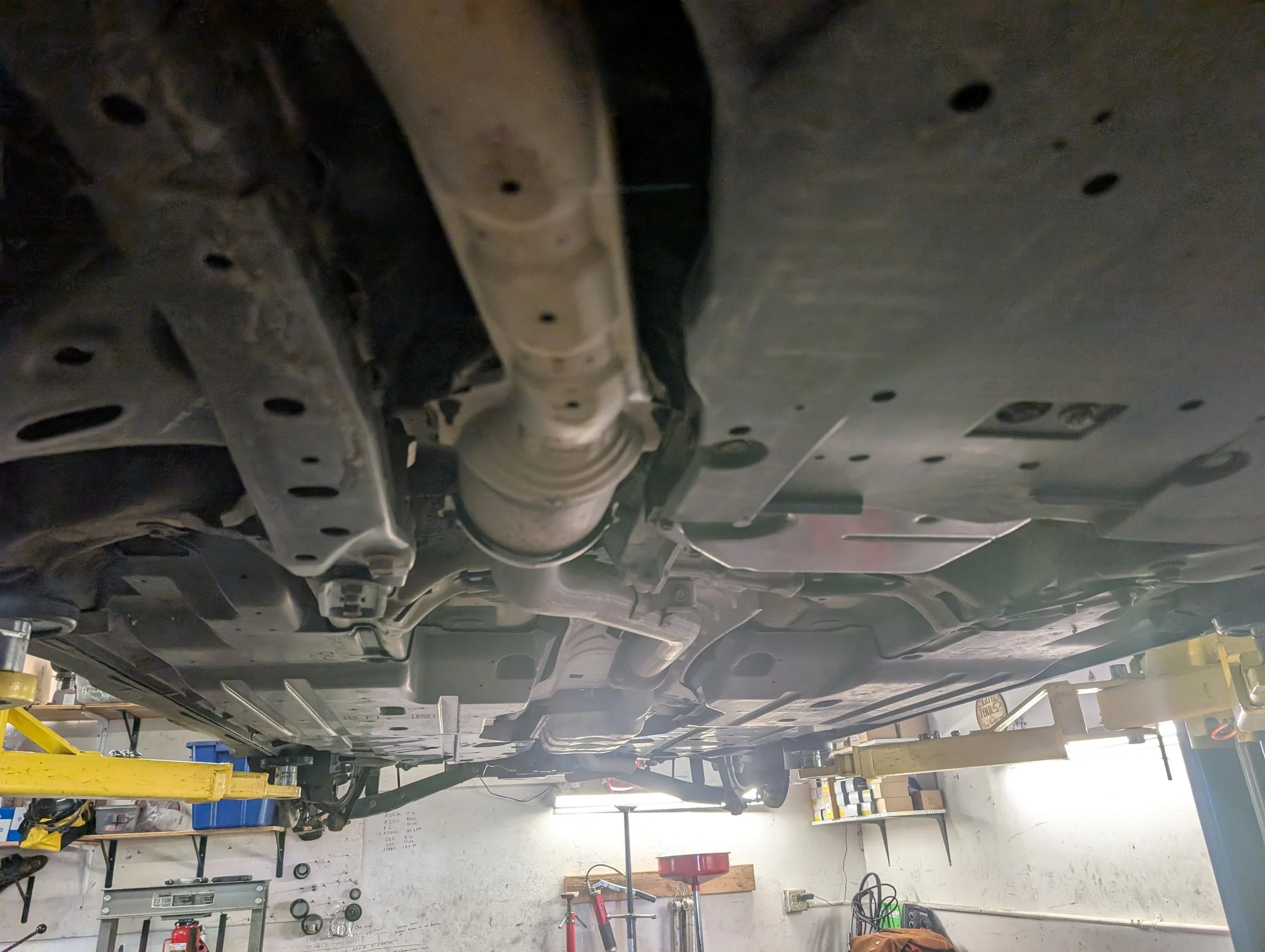
Subaru Exhaust Repair & Replacement in Englewood, CO
Exhaust problems are usually easy to hear before you know exactly what failed. The car gets louder. Something rattles underneath. You smell exhaust near the vehicle. Or a pipe, flange, hanger, or muffler finally gives up after years of heat, vibration, and road exposure.
Suba Rupair handles Subaru exhaust repair and replacement in Englewood, CO for drivers from Denver, Littleton, Lakewood, Sheridan, Glendale, and nearby areas. We inspect exhaust leaks, rusted parts, broken hangers, muffler problems, rattles, and damaged piping so we can explain what actually needs repair.
Some exhaust issues are simple. Others are tied into emissions sensors, catalytic converter concerns, or rusted hardware that makes the repair less straightforward. We start by finding the source of the noise, leak, smell, or damage.
Quick Answer
Suba Rupair repairs and replaces Subaru exhaust components when there are leaks, rattles, loud exhaust noise, rusted pipes, damaged mufflers, broken hangers, or exhaust smells.
If your Subaru suddenly sounds louder, rattles underneath, smells like exhaust, or has visible rust or damage, it is worth having the exhaust system inspected.
If your main issue is a catalytic converter efficiency code, P0420-style code, failed emissions concern, or emissions-related check engine light, our catalytic converter diagnostic page is the better starting point.
Call or text Suba Rupair to schedule Subaru exhaust inspection, repair, or replacement.
Common Signs of a Subaru Exhaust Problem
Exhaust issues can sound different depending on where the leak or damage is.
You may notice:
loud exhaust noise
roaring during acceleration
ticking or puffing sounds
rattling under the vehicle
exhaust smell near or inside the car
visible rust on exhaust parts
broken exhaust hangers
muffler noise
vibration from loose exhaust components
noise that gets worse when accelerating
a check engine light if the leak affects sensor readings
If you smell exhaust inside the cabin, do not ignore it. That is more than an annoyance.
What We Check First
The first job is figuring out where the exhaust issue starts.
Depending on the symptom, we may check:
exhaust pipes
muffler condition
flanges and gaskets
joints and connections
hangers and mounting points
rusted sections
heat shields
exhaust leaks
catalytic converter area
oxygen sensor areas
visible road damage
signs of fumes near the cabin
A small leak at a flange is a different conversation than a rusted section of pipe or a muffler that is failing. We want to know which one we are dealing with before recommending repair or replacement.
Exhaust Leaks
An exhaust leak can make a Subaru louder, create a ticking or puffing sound, or cause an exhaust smell around the vehicle.
Leaks often happen around flanges, gaskets, pipes, welds, flex sections, or rusted metal. A small leak may only be noticeable on cold start or during acceleration. A larger leak can make the vehicle loud all the time.
If the leak is near an oxygen sensor or another monitored part of the exhaust, it may also affect sensor readings and contribute to a check engine light.
Rattles, Heat Shields, and Loose Parts
Not every rattle means the muffler or exhaust pipe is bad.
Subarus can develop exhaust rattles from loose heat shields, broken hangers, rusted brackets, or parts vibrating against each other. These sounds can be annoying, but they can also warn that something is loose enough to get worse.
We try to find the actual source of the rattle before replacing parts. Sometimes it is a small hardware or heat-shield issue. Sometimes the exhaust is rusted enough that replacement makes more sense.
Rusted Exhaust Parts
Rust changes the repair conversation.
A cleaner exhaust system may allow for a smaller repair. A heavily rusted system may not come apart cleanly, or one repaired section may be attached to another section that is ready to fail.
This is especially common on vehicles that spent time in snowy or salt-heavy areas. A Subaru can look decent from the outside and still have exhaust hardware underneath that is rusted, thin, or difficult to save.
When the surrounding parts are too far gone, replacement may be the more practical option.
Muffler and Pipe Replacement
If the muffler, pipe, flange, or another exhaust section is damaged or rusted through, replacement may be needed.
We try to avoid replacing more than necessary, but exhaust repairs depend heavily on the condition of the surrounding metal. If a nearby section is weak, broken, or rusted badly, a small patch may not last.
The repair should match the condition of the system, not just the one spot making noise today.
Exhaust Repair vs. Catalytic Converter Diagnosis
Exhaust repair and catalytic converter diagnosis overlap, but they are not the same starting point.
This page is for physical exhaust problems: loud noise, leaks, rattles, rusted parts, broken hangers, damaged mufflers, and piping issues.
Catalytic converter diagnosis is more focused on emissions performance, P0420-style codes, catalyst efficiency, restriction concerns, oxygen sensor data, and whether the converter itself is doing its job.
If your Subaru is loud or rattling, start here. If the check engine light is on for a catalyst efficiency code, start with catalytic converter diagnosis.
Can an Exhaust Leak Cause a Check Engine Light?
Yes, depending on where the leak is.
A leak near oxygen sensors or other monitored exhaust areas can affect readings and make the computer think something else is wrong. That is one reason we check for exhaust leaks before assuming a sensor or catalytic converter has failed.
This can matter on used Subarus too. A car with an exhaust leak and an emissions code may need more than a quick code scan to understand what is actually happening.
Why Subaru Experience Helps
Subaru exhaust issues often overlap with rust, heat-shield rattles, catalytic converter concerns, oxygen sensor readings, and underbody wear. A rattle may be harmless. A smell may need attention quickly. A leak may affect emissions data.
Because Suba Rupair works on Subarus every day, we are used to sorting those details out. We can tell you whether the exhaust concern looks like a simple fix, a rust-related replacement, or something that needs a closer emissions diagnosis.
Schedule Subaru Exhaust Repair or Replacement
If your Subaru is loud, rattling, leaking exhaust, smelling like fumes, or showing visible exhaust damage, Suba Rupair can inspect it and explain what we find.
We provide Subaru exhaust repair and replacement in Englewood, CO for drivers throughout Denver, Littleton, Lakewood, Sheridan, Glendale, and the surrounding metro area.
Call, text, or use our contact form to schedule Subaru exhaust repair.
Frequently Asked Exhaust Repair Questions
-
A Subaru can get loud suddenly if an exhaust pipe, gasket, flange, muffler, or rusted section opens up. A broken hanger or damaged connection can also change the sound quickly.
-
It can be. Exhaust leaks may create fumes, noise, cabin odor, or emissions problems. If you smell exhaust inside the cabin, have the vehicle inspected as soon as possible.
-
A rattle underneath may come from a loose heat shield, broken exhaust hanger, rusted bracket, damaged pipe, or exhaust parts vibrating against each other.
-
No. Exhaust repair usually deals with physical leaks, rattles, mufflers, pipes, and rusted components. Catalytic converter diagnosis is more focused on emissions codes, catalyst efficiency, restrictions, and converter condition.
-
Yes. If the leak is near an oxygen sensor or monitored exhaust area, it can affect sensor readings and contribute to a check engine light.