
Subaru Maintenance Schedule in Englewood, CO
Subaru maintenance is easier to keep up with when it is organized around mileage instead of waiting for something to go wrong.
Suba Rupair helps Subaru owners in Englewood, CO plan maintenance around oil changes, 30k service, 60k service, fluids, filters, brakes, differential service, PCV service, and inspection items. We work with drivers from Denver, Littleton, Lakewood, Sheridan, Glendale, and nearby areas.
Subaru maintenance schedules vary by model year, engine, transmission, and driving conditions. Your owner’s manual, Warranty & Maintenance Booklet is the official schedule for your specific vehicle. This page explains how we help Subaru owners think through maintenance in the shop.
A maintenance schedule is not meant to scare you into doing everything at once. It gives you a way to stay ahead of the repairs that become more expensive when they are ignored.
Quick Answer
Suba Rupair helps Subaru owners plan maintenance based on mileage, service history, and what we see on the vehicle.
Subaru commonly lists oil changes around 6 months or 6,000 miles for many vehicles. At Suba Rupair, we recommend 5,000-mile oil change intervals. In our shop, we see Subarus that go beyond that interval more often come in with serious engine problems, and many boxer engines consume more oil as they age.
A 5,000-mile rhythm also makes larger maintenance easier to track. Every sixth oil change lines up with 30,000 miles. Every twelfth lines up with 60,000 miles.
If you are not sure what your Subaru is due for, call or text Suba Rupair and we can help you sort it out.
How to Use This Page
Think of this page as the map.
If you already know what service you need, the specific service page will be more useful. Oil changes, 30k service, 60k service, differential service, PCV service, inspections, and filter replacement each have their own pages with more detail.
If you are not sure what your Subaru is due for, this page can help you figure out the right starting point.
Why We Recommend 5,000-Mile Oil Changes
Subaru commonly lists oil changes around 6 months or 6,000 miles for many models. We recommend 5,000 miles.
That recommendation comes from what we see in the shop. Subarus that go beyond that interval more often show up with serious engine problems, especially as mileage climbs. Many boxer engines also consume more oil as they age, so a shorter interval gives you more room before low oil or dirty oil becomes part of the problem.
The 5,000-mile schedule is also easy to remember:
5,000 - 25,000 miles: oil change
30,000 miles: oil change plus 30k service review
35,000-55,000: oil change
60,000 miles: oil change plus 60k service review
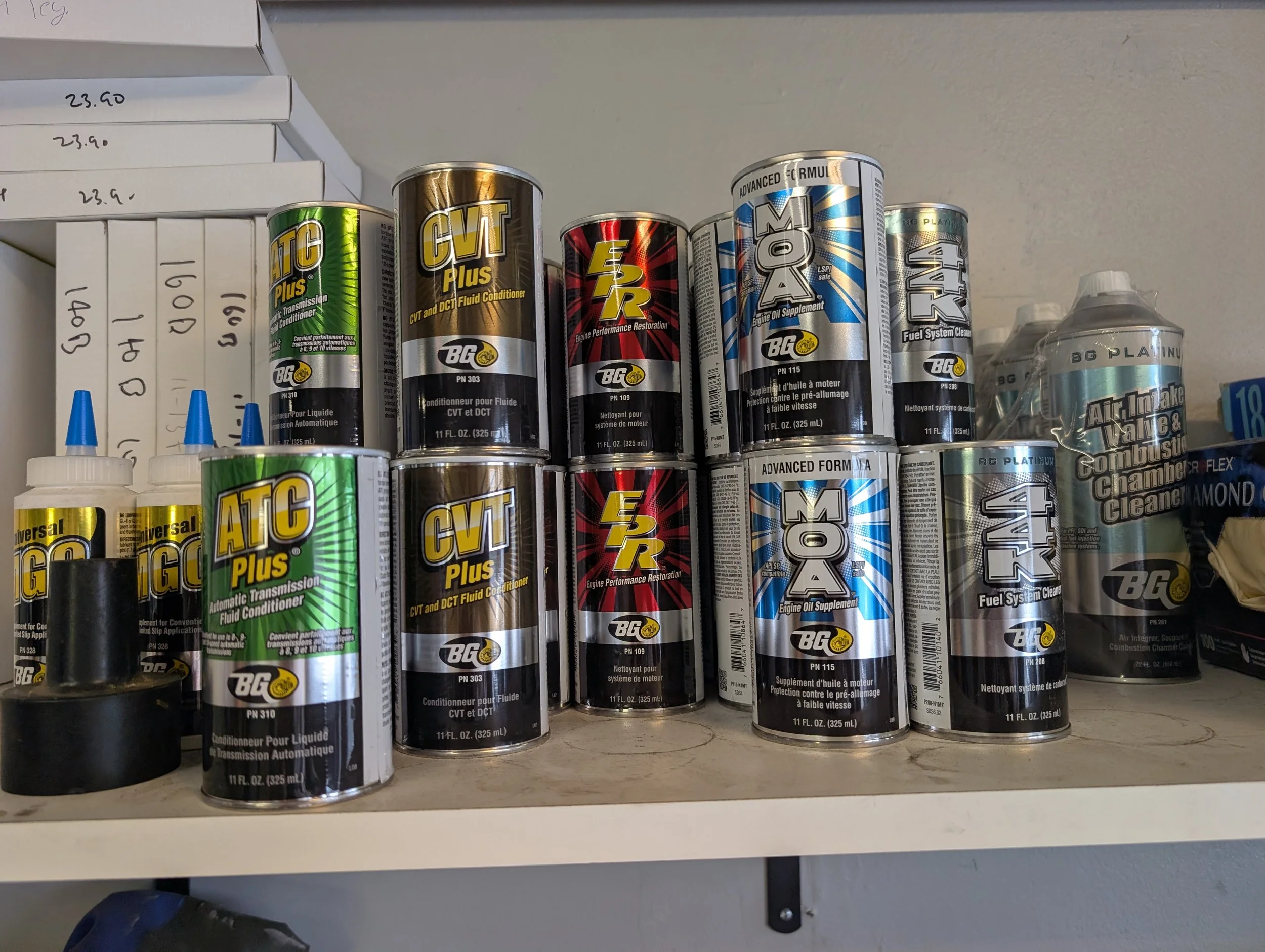
For the deeper explanation of our filters, oil, and BG MOA additive, use the Subaru oil change page.
Common Subaru Maintenance Items
The exact maintenance depends on model, mileage, engine, transmission, driving conditions, and service history.
Common items we may discuss include:
Oil changes
Engine air filter
Cabin air filter
Brake fluid
Differential fluid
Transmission or CVT service where appropriate
Spark plugs where applicable
PCV valve and PCV connector
Coolant condition
Belts and pulleys
Battery condition
Brakes
Tires and tire rotation
Steering and suspension inspection
Fluid leak checks
Wiper blades
Lights and basic safety items
Not every visit needs every item. The point is to know what is due, what has already been done, and what should be watched.
30k Maintenance Service
The 30k service is usually the first bigger maintenance checkpoint after several oil changes.
The exact items depend on the Subaru, but this is when we usually review filters, fluids, brakes, tires, leak signs, battery condition, and basic wear items. It is also a good time to look underneath the car more carefully instead of only doing a quick oil change.
If your Subaru is near 30,000 miles, our 30k maintenance service page is the better place to review what that visit may include.
60k Maintenance Service
The 60k service is usually a larger maintenance visit than the 30k.
Depending on the model and service history, this may be when we review differential service, brake fluid, filters, spark plugs where applicable, PCV condition, transmission or CVT service where appropriate, and other inspection items.
We pay close attention to PCV condition around this mileage. In our experience, PCV valves are often worth checking by 60k, especially if the Subaru has oil consumption, fuel-smelling oil, rough idle, lean codes, or oil leak concerns.
If your Subaru is near 60,000 miles, the 60k maintenance service page should be the main page for that package.
Differential Service and AWD Maintenance
Subaru all-wheel-drive vehicles still need drivetrain maintenance.
Differential fluid helps protect the gears and bearings inside the front and rear differentials. The exact timing depends on the model, mileage, and service history, so we usually look at the schedule and the condition of the vehicle before making a recommendation.
If you bought the Subaru used and do not know when the differential fluids were last serviced, it is worth checking. Our Subaru Differential Service page goes into more detail.
Filters, Fluids, and Small Items That Get Missed
Some maintenance items are easy to overlook because they do not feel urgent.
Cabin filters can clog and reduce HVAC airflow. Engine air filters can get dirty enough to affect airflow. Brake fluid can age. Wiper blades can get bad enough that you only notice during the next storm. Battery condition can seem fine until the first cold morning.
These are not glamorous repairs, but they matter. A lot of maintenance is simply keeping small problems from becoming inconvenient at the worst time.
Maintenance for Used Subarus With Unknown History
A used Subaru with no clear service records needs a different approach.
If you do not know what has been done, we usually start by establishing a baseline. That may mean checking oil condition, filters, brake fluid, differential fluid, coolant condition, battery condition, leaks, tire wear, brakes, and visible suspension wear.
We do not assume everything is overdue, but we also do not assume the seller kept up with every service. A baseline inspection helps decide what should be done now and what can wait.
This is especially useful after buying a used Subaru or when a pre-purchase inspection finds maintenance gaps.
Maintenance vs. Repair
Maintenance is the work you plan before there is a symptom. Repair is what happens after something starts leaking, grinding, overheating, failing, or setting warning lights.
An oil change, filter replacement, brake fluid service, differential service, tire rotation, or inspection is maintenance. An oil leak, check engine light, bad wheel bearing, no-start problem, or overheating issue is repair.
Sometimes a maintenance visit finds a repair. That is not a bad thing. It usually means the issue was caught before it surprised you later.
Colorado Driving Conditions Matter
Colorado driving can be harder on a Subaru than easy highway driving in mild weather.
Short trips, cold starts, mountain driving, steep grades, snow, rough roads, potholes, dust, and temperature swings can all affect maintenance needs.
That is one reason we prefer practical maintenance intervals instead of stretching everything as far as possible. A Subaru that sees mountain trips, winter driving, or city stop-and-go traffic may need closer attention than one with easy highway miles.
Why a Subaru-Focused Shop Helps
A maintenance visit is more useful when the shop knows what to look for on Subarus.
We pay attention to oil consumption, PCV issues, oil leaks, cam carrier seepage, cooling system signs, brake wear, wheel bearings, differential service history, suspension wear, and other patterns we see often in the shop.
The goal is not to turn every maintenance visit into a long repair list. The goal is to give you a clear picture of what is due, what looks good, and what should be watched.
Schedule Subaru Maintenance Service
If your Subaru is due for maintenance, approaching 30k or 60k, or has unknown service history, Suba Rupair can help you get the schedule organized.
We provide Subaru maintenance service in Englewood, CO for drivers throughout Denver, Littleton, Lakewood, Sheridan, Glendale, and the surrounding metro area.
Call, text, or use our contact form to schedule Subaru maintenance.
Frequently Asked Maintenance Schedule Questions
-
Subaru commonly lists oil changes around 6 months or 6,000 miles for many vehicles, depending on the model and driving conditions. At Suba Rupair, we recommend 5,000-mile oil change intervals because we see Subarus that go beyond that interval more often come in with serious engine problems.
-
We are basing that recommendation on what we see in the shop. Subaru boxer engines can consume more oil as they age, and customers who stretch oil changes beyond the common 6,000-mile interval more often seem to show up with serious engine issues. The 5,000-mile interval gives more margin.
-
A Subaru 30k service may include an oil change, inspections, filters, brake fluid service, tire rotation, and other items depending on the model and service history. The exact schedule varies by vehicle. Direct injection engines should have their intake cleaning done at this interval as well for chemical treatments or 60k for walnut blasting
-
A Subaru 60k service is usually more involved. Depending on the model, it may include filters, brake fluid, differential service, transmission or CVT inspection/service where appropriate, spark plugs where applicable, PCV-related service, and other inspection items.
-
Yes. Subaru all-wheel-drive vehicles use differentials that rely on proper fluid condition. Differential service helps protect gears and bearings and is often reviewed during larger maintenance intervals.
-
Start with a baseline inspection. We can check fluids, filters, leaks, brakes, tires, battery condition, suspension, and common Subaru maintenance items so you know what is due and what can wait.