
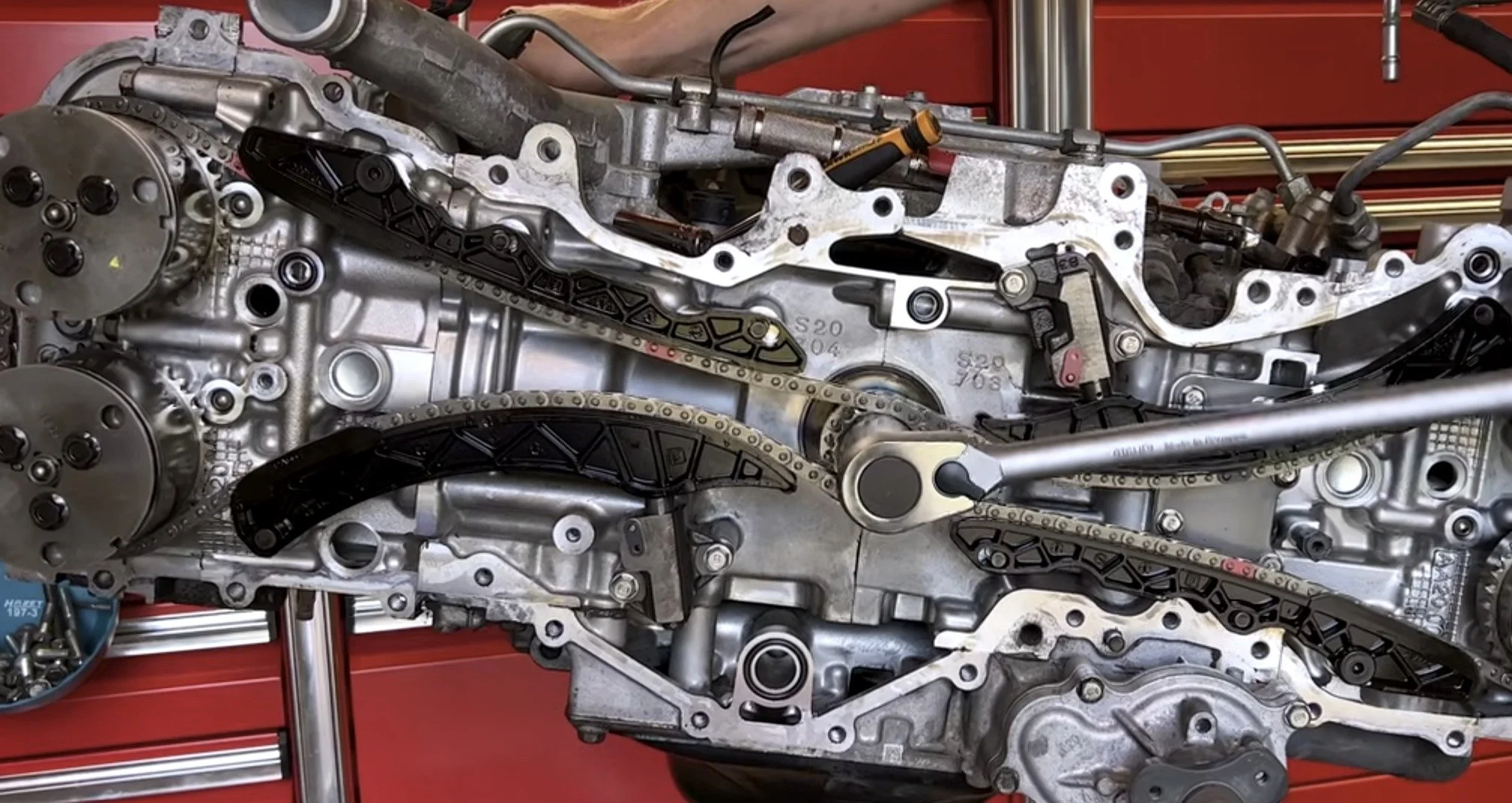
Subaru Timing Cover Reseal in Englewood, CO
A timing cover leak can be frustrating because the oil often shows up near the front of the engine, but that does not always mean the timing cover is where it started.
Suba Rupair performs Subaru timing cover reseals in Englewood, CO for drivers from Denver, Littleton, Lakewood, Sheridan, Glendale, and nearby areas. We confirm the leak source and severity before recommending the repair, because front engine oil leaks can be confused with cam carrier leaks, valve cover leaks, oil pan leaks, or other seal leaks.
We are also careful with timing covers that show signs of prior work or overtightened bolts. We frequently see covers that are more prone to cracking after bolts have been overtightened, so we do not like opening them unless the repair is clearly justified or replacement is already part of the plan.
A timing cover reseal can be a labor-heavy repair. It is not something we want to recommend just because there is oil near the front of the engine.
Quick Answer
Suba Rupair reseals Subaru timing covers when the timing cover area is confirmed as the source of an oil leak and the leak is active enough to justify the repair.
Common signs may include oil seepage near the front of the engine, burning oil smell, visible oil buildup, oil collecting lower on the engine, or a leak found during inspection.
If the source is not clear, we may start with a Subaru oil leak inspection. Oil can travel before it drips, so we want to know whether the leak is really coming from the timing cover, cam carrier, valve cover, oil pan, head gasket area, or another seal.
Call or text Suba Rupair to schedule Subaru timing cover leak inspection or reseal service.
Signs of a Subaru Timing Cover Leak
Timing cover leaks often show up as oil near the front of the engine. Sometimes the leak is obvious. Other times, the oil has already spread enough that the source is harder to read.
You may notice:
Oil buildup near the front of the engine
Oil collecting low on the engine
Burning oil smell after driving
Oil spots under the vehicle
Smoke if oil reaches hot exhaust parts
Oil residue found during an inspection
Oil level dropping between services in more active cases
A shop mentioning a timing cover or timing chain cover leak
A small amount of oil near the timing cover does not automatically mean the cover needs to be resealed right away. The leak should be judged by where it starts, how active it is, and whether it is creating other symptoms.
Timing Cover Leak vs. Other Subaru Oil Leaks
Subaru oil leaks can stack up visually. One leak may run downward and make another area look worse than it is.
A front engine oil leak may involve the timing cover area, but it may also come from nearby seals, valve covers, cam carrier areas, oil pan areas, or old oil residue from a previous leak.
That is why we avoid calling it a timing cover leak based on location alone. We want to trace the leak back to where fresh oil begins.
When the Source Is Not Clear
Sometimes the best first step is cleaning the area and checking it again later.
If there is too much old oil buildup, we may clean the engine area and ask the owner to return after a few days to a week of driving. Once fresh oil starts to show again, it is easier to see whether the leak begins at the timing cover, cam carrier, valve cover, oil pan, or another seal.
That can feel like an extra step, but it can save a customer from paying for the wrong reseal.
What a Timing Cover Reseal Involves
A timing cover reseal is not an external patch. The cover has to be accessed, removed as needed, cleaned, resealed, and reassembled carefully.
The exact process depends on the Subaru model and engine, but the repair may involve:
Confirming the timing cover as the leak source
Removing parts needed for access
Removing the timing cover
Cleaning old sealant and oil residue
Checking the sealing surfaces
Applying the correct sealant
Inspecting nearby seals where access allows
Reassembling and checking for leaks
This is the kind of repair where preparation matters. Old oil, sealant residue, or rushed cleaning can cause the leak to return.
Timing Cover Bolts and Cracking Concerns
One thing we pay attention to on Subaru timing covers is bolt condition and signs of previous work.
We frequently see timing cover bolts that have been overtightened. When that happens, the cover can become more prone to cracking or sealing problems. If we see signs that the cover has been overtightened before, we are more cautious about opening it unless there is a strong reason to go in.
That might mean we are highly suspicious of an issue inside the timing cover, the leak is active enough to justify the work, or we are already planning to replace the cover. Otherwise, if the seepage is mild and the risk of disturbing the cover is higher than the benefit, monitoring it may be the smarter call.
This is another reason we do not recommend timing cover reseals casually. The decision depends on the leak, the condition of the cover, signs of prior work, and whether opening it is likely to create more problems than it solves.
Why Surface Preparation Matters
Timing covers usually seal with carefully applied sealant rather than a simple rubber gasket. That makes surface preparation a big part of the job.
The sealing surfaces need to be clean and ready for new sealant. Oil residue, old sealant, dirt, or uneven application can create a weak spot. On a repair with this much labor, we want to take the time to do the sealing work correctly.
Timing Cover Reseal vs. Cam Carrier Reseal
Timing cover reseal and cam carrier reseal are different repairs, even though both can cause oil seepage and both may be discussed during Subaru oil leak diagnosis.
A cam carrier leak usually starts higher around the cam carrier sealing area. A timing cover leak usually involves the front cover area of the engine. The problem is that oil can travel, so the visible wet area does not always tell the full story.
If the leak pattern points toward the cam carrier, the cam carrier page may be the better fit. If the timing cover is confirmed as the source, this page is the right repair path.
Is a Timing Cover Leak Urgent?
It depends on how active the leak is.
A light seep may be something to monitor during future oil changes. A more active leak deserves more attention, especially if it is leaving oil spots, creating a burning smell, smoking, or lowering the oil level between services.
The repair decision should match the leak severity. A real leak does not always mean immediate resealing, but it should be watched so it does not become a bigger problem unnoticed.
Related Repairs While Access Is Available
Because timing cover reseal work can involve a lot of labor, it may make sense to inspect nearby parts while access is available.
Depending on the model, mileage, and what is already being removed, we may talk about related seals, timing-related components, belts or pulleys where applicable, cooling system parts, or other nearby wear items.
That does not mean everything nearby should automatically be replaced. It means access matters. If something is worn or likely to create another labor-heavy repair soon, it is better to discuss it before the car is back together.
Why a Subaru-Focused Shop Helps
Subaru oil leaks can be easy to mislabel. A timing cover leak, cam carrier leak, valve cover leak, oil pan leak, or head gasket area seep can all leave oil in places that confuse the first inspection.
Because Suba Rupair works on Subarus every day, we are used to slowing down and tracing the leak before recommending a labor-heavy reseal. If the timing cover is the source, we can explain the repair. If the leak starts somewhere else, we will point you in that direction instead.
Schedule a Subaru Timing Cover Reseal
If your Subaru has a suspected timing cover leak, front engine oil leak, burning oil smell, or visible oil buildup near the front of the engine, Suba Rupair can inspect it and explain what we find.
We perform Subaru timing cover reseals in Englewood, CO for drivers throughout Denver, Littleton, Lakewood, Sheridan, Glendale, and the surrounding metro area.
Call, text, or use our contact form to schedule Subaru timing cover leak inspection or reseal service.
Frequently Asked Timing Cover Reseal Questions
-
Often we see oil buildup near the front of the engine, visible seepage around the timing cover area, burning oil smell, oil collecting lower on the engine, or a leak found during inspection. The source should be confirmed before recommending reseal work.
-
They’re different components which can both cause oil seepage, and oil can travel enough to make them look similar during a quick inspection.
-
It depends on the severity. A light seep may be monitored, but a leak that causes oil spots, smoke, strong burning smell, or low oil between services should be inspected and planned for repair.
-
We frequently see Subaru timing cover bolts that have been overtightened during previous work. Overtightening can make the cover more prone to cracking or sealing problems. If we see signs of that, we are more cautious about opening the cover unless we strongly suspect an issue inside, the leak clearly justifies the repair, or cover replacement is already planned.
-
If the source is unclear, we may recommend starting with an oil leak inspection. In some cases, we clean the engine area and recheck it after a few days to a week of driving so fresh oil can show where the leak actually starts.
-
Collaborative, honest, and straightforward. We're here to guide the process, bring ideas to the table, and keep things moving.