
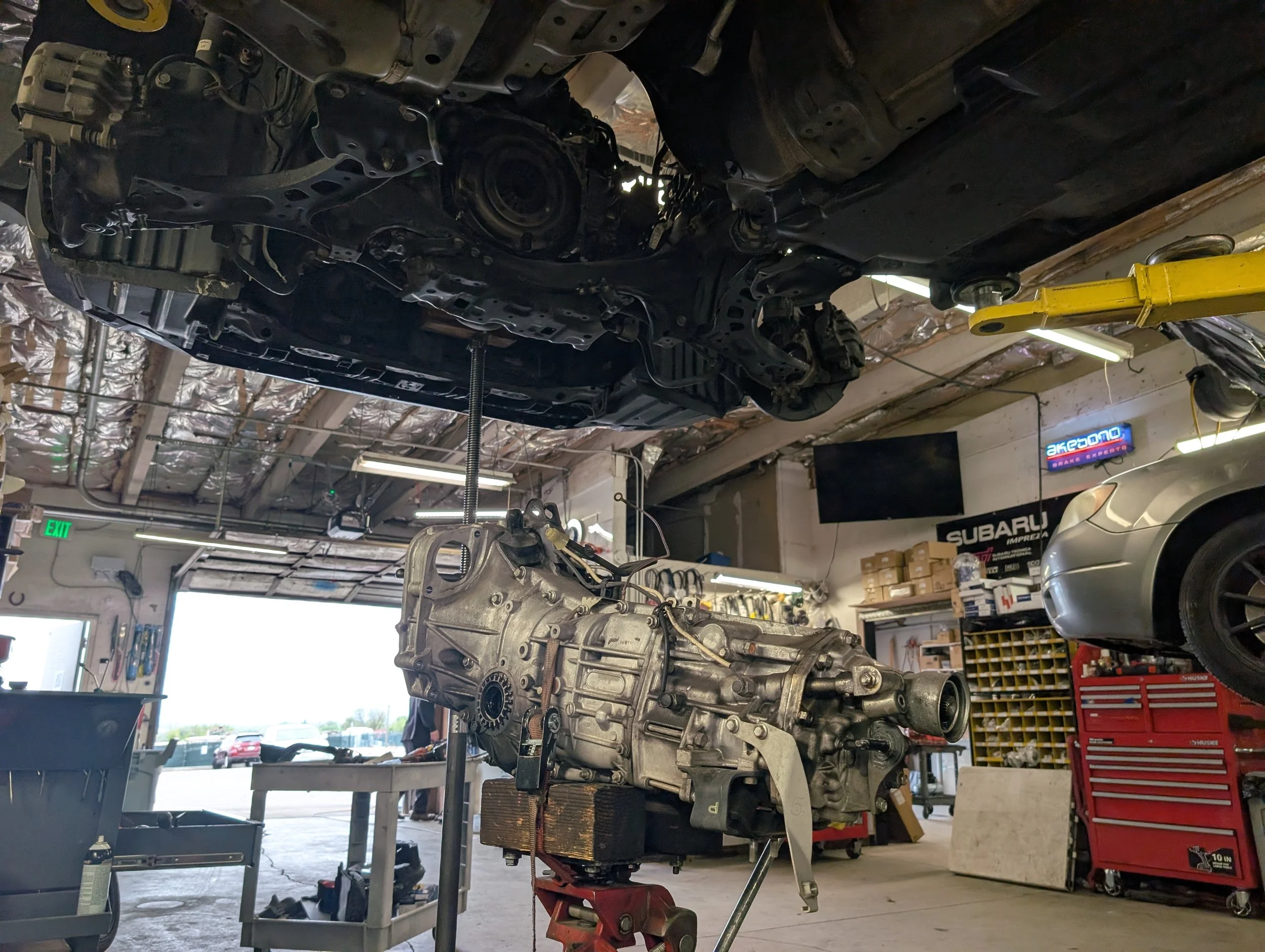
Subaru Transmission Replacement in Englewood, CO
Subaru Transmission Replacement in Englewood, CO
Transmission replacement is one of the bigger repair decisions a Subaru owner can face. It is expensive enough that the diagnosis needs to be right.
Suba Rupair handles Subaru transmission replacement in Englewood, CO for drivers from Denver, Littleton, Lakewood, Sheridan, Glendale, and nearby areas. If your Subaru has severe slipping, delayed engagement, major shifting problems, drivetrain noise, or has already been diagnosed with transmission failure, we can inspect it and explain the next step.
We do not like treating every transmission symptom as a failed transmission. A bad valve body, fluid concern, electrical issue, differential problem, clutch issue on manual models, or driveline noise can sometimes make the situation look worse than it is.
Quick Answer
Suba Rupair replaces Subaru transmissions when inspection points to major transmission failure or when replacement is the most practical repair.
Signs that may lead to a replacement conversation include severe slipping, delayed engagement, major internal failure, repeated transmission problems, serious drivability symptoms, or transmission damage that does not make sense to repair another way.
If the issue has not been confirmed yet, we usually recommend starting with a Subaru transmission diagnostic. A smaller repair, such as valve body replacement, may be possible depending on the symptoms and codes.
Call or text Suba Rupair to schedule Subaru transmission diagnosis or replacement consultation.
When Transmission Replacement May Be Needed
A Subaru transmission replacement may be recommended when the transmission can no longer operate reliably and a smaller repair is unlikely to solve the problem.
Possible signs include:
severe slipping
delayed engagement into drive or reverse
harsh or inconsistent shifting
transmission warning lights
limp-mode behavior
serious drivability problems
strong shudder or vibration
internal transmission failure
repeated transmission problems after prior work
contaminated or damaged fluid
loud whining, whirring, or grinding tied to transmission operation
a prior diagnosis recommending replacement
That list does not mean every one of those symptoms automatically equals replacement. It means the transmission needs a careful look before anyone makes a major repair recommendation.
Before Replacing a Transmission
Transmission replacement should not be the first guess.
Before recommending it, we want to know what the Subaru is doing on the road, what codes are stored, how the transmission behaves hot and cold, whether there are leaks, and whether the fluid condition tells a story.
Depending on the situation, we may look at:
current and stored transmission codes
scan data when useful
fluid condition where applicable
visible leaks
delayed engagement
slipping or shuddering
drivetrain noises
valve body-related symptoms
differential or driveline concerns
maintenance and repair history
previous transmission work
Sometimes the answer is clear. Sometimes the symptoms point to a smaller repair. Either way, the inspection helps keep the repair decision grounded.
When a Smaller Repair May Be Possible
Not every serious-feeling transmission symptom means the full transmission is done.
Depending on what we find, the issue may involve:
valve body failure
fluid-related concerns
a leak
wiring or connector problems
sensor issues
differential or driveline noise
engine performance problems that feel like transmission hesitation
This is why we separate transmission diagnosis from transmission replacement. The replacement page is for cases where replacement is already likely or confirmed. If the source is still unclear, the diagnostic page is usually the better starting point.
Valve Body Problems vs. Full Transmission Failure
Valve body issues can make a Subaru shift harshly, hesitate, trigger warning lights, or act like the transmission is failing. From the driver’s seat, that can feel serious.
A valve body replacement is a targeted transmission repair. A full transmission replacement is a much bigger job. If testing points toward the valve body, replacing the entire transmission may not be the right first move.
At the same time, a valve body is not a cure for every transmission problem. If the transmission has deeper internal damage, replacement may still be part of the conversation.
CVT and Automatic Transmission Replacement
Many Subaru models use CVT transmissions. Others use conventional automatics. The replacement discussion depends on the model, mileage, symptoms, service history, and what failed.
CVT problems may show up as shuddering, slipping-like behavior, delayed response, whining sounds, warning lights, or poor drivability. Conventional automatic transmission problems may show up as harsh shifting, slipping, fluid problems, or delayed engagement.
The transmission type matters. So does the overall condition of the car.
Used, Rebuilt, or Replacement Transmission Options
When a Subaru needs a transmission replacement, the right option depends on the vehicle and the repair situation.
Some owners may choose a used transmission. In other cases, a rebuilt or replacement unit may make more sense. The best choice depends on availability, cost, warranty, mileage, and how long you plan to keep the Subaru.
Things we consider include:
vehicle age and mileage
overall condition of the car
transmission availability
warranty options
cost compared with vehicle value
other major repairs the vehicle may need
maintenance history
rust or underbody condition
We try to make this a practical conversation. A transmission replacement can be worth it on the right Subaru. On a neglected car with several other major issues, the decision may need more thought.
Transmission Replacement and Used Subaru Buyers
A used Subaru with transmission symptoms can change the buying decision quickly.
During pre-purchase inspections, we pay attention to delayed engagement, harsh shifting, transmission noises, warning lights, recently cleared codes, and service history. A seller may describe strange behavior as “normal Subaru feel,” but transmission problems can become expensive fast.
If you are buying a used Subaru and the transmission feels questionable, it is better to know before the purchase than after.
Why a Subaru-Focused Shop Helps
Subaru transmission symptoms can overlap with valve body issues, CVT behavior, differential noise, wheel bearings, axles, engine performance, and electrical controls.
A humming noise may not be the transmission. A hesitation may not be the transmission. Harsh shifting may not mean the whole unit is failed.
Because Suba Rupair works on Subarus every day, we are used to sorting through those overlaps before recommending a major repair. When replacement is needed, we can explain why and help you decide whether it makes sense for the vehicle.
Schedule Subaru Transmission Replacement or Diagnosis
If your Subaru has been diagnosed with transmission failure, or if you are worried replacement may be needed, Suba Rupair can inspect the vehicle and explain the options.
We provide Subaru transmission replacement in Englewood, CO for drivers throughout Denver, Littleton, Lakewood, Sheridan, Glendale, and the surrounding metro area.
Call, text, or use our contact form to schedule Subaru transmission diagnosis or replacement consultation.
Frequently Asked Transmission Replacement Questions
-
Possible signs include severe slipping, delayed engagement, major shifting problems, limp-mode behavior, transmission warning lights, serious drivability issues, or a confirmed diagnosis of internal transmission failure.
-
No. Transmission symptoms can come from valve body issues, leaks, fluid concerns, wiring, sensors, differential problems, clutch issues, or other drivetrain concerns. The source should be confirmed before replacing the transmission.
-
Yes. A bad valve body can cause harsh shifting, delayed engagement, warning lights, and drivability problems that feel like a major transmission failure. Testing helps separate valve body problems from full transmission failure.
-
It depends on the Subaru’s condition, mileage, maintenance history, repair cost, and how long you plan to keep it. A well-maintained Subaru may be worth repairing. A vehicle with several major problems may need a more careful cost-benefit discussion.
-
Yes. Transmission replacement is a major repair. Diagnosis helps confirm whether replacement is actually needed or whether a smaller repair may solve the problem.