
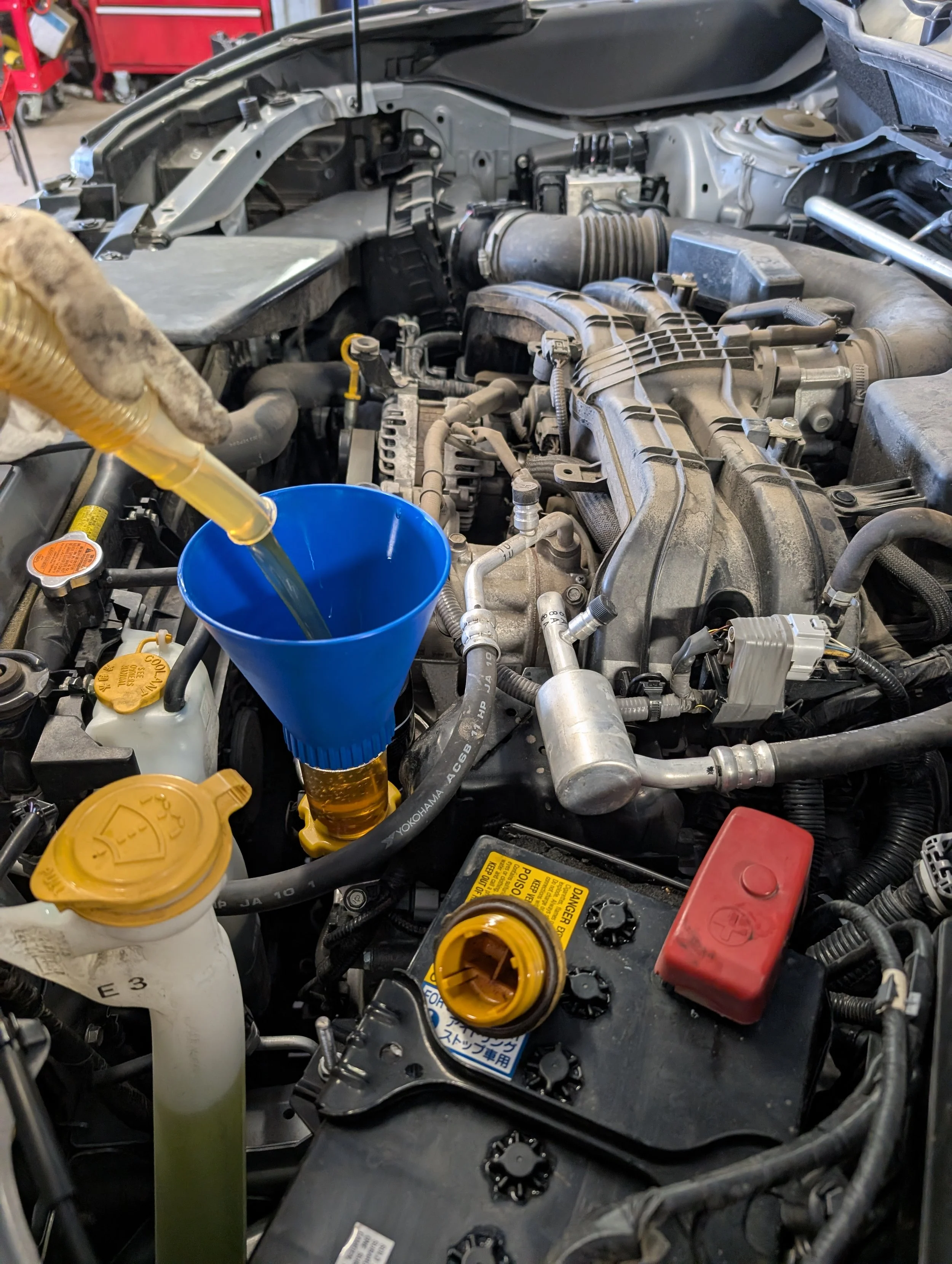
Subaru Oil Change in Englewood, CO
Routine oil service is often the difference between a Subaru engine lasting well past 200k miles or prematurely developing serious engine problems. Its also when small problems are first noticed before they become expensive repairs. Sadly, we have seen more than a few engines totaled with rod knock or other issues after showing up bone dry without any detectable oil on their dipstick.
At Suba Rupair, we pay close attention to more than just replacing the oil and filter. Fluid condition, oil level trends, leaks, underbody condition, unusual smells, and visible wear can all help reveal how the vehicle is aging and whether larger maintenance issues may be starting to develop.
We see many Subarus that follow manufacturer oil intervals too long for Colorado driving conditions and aging boxer engines. Shorter service intervals often make it easier to monitor oil consumption, reduce sludge buildup in the engine, line up with major maintenance intervals, and stay ahead of developing problems before warning lights or drivability symptoms appear.
Quick Answer
Suba Rupair performs oil changes using OEM Japanese Subaru filters, Dexos-approved oil, and BG MOA oil additive.
Routine oil service also gives us an opportunity to monitor for developing leaks, oil consumption, fluid contamination, torn CV boots, suspension wear, and other issues that commonly become noticeable during inspections.
We recommend changing Subaru oil at 5,000-mile intervals. This interval is better for protecting important components and simplifies planning, lining up with regular long-term maintenance intervals like 30k and 60k.
Several models are notorious for oil consumption and we frequently see clients that are far exceeding safe oil change intervals. As age and mileage increase, this becomes more and more important to monitor.
Call or text Suba Rupair to schedule a Subaru oil change.
What We Use for Subaru Oil Changes
For our Subaru oil changes, we use:
OEM Japanese-made Subaru oil filters
GM’s Dexos-approved oil
BG MOA oil additive
We use these products because oil quality and reliable filtration matter. Not all oil services use the same filtration quality or oil formulations, even if they appear similar on the invoice. A cheaper oil change will provide basic lubrication but they can have poorer stability and less ability to internal surfaces clean. This can affect long-term engine wear, oil consumption, and how the car holds up between services.
We use OEM Japanese-made Subaru filters because we have seen quality issues with other filters, including well-known brand-name filters and even some non-Japanese-made OEM filters. In some cases, we have seen metal shavings or other contamination inside filters. That is not something we want circulating through a Subaru engine.
We use Dexos-approved oil because it is held to a higher standard than many basic oil formulations and includes detergents that help reduce sludge buildup in expensive components such as cam gears.
We also add BG MOA for extra protection between oil changes. It helps support oil stability, lubrication, and deposit control as the oil ages, which is especially useful on Subaru boxer engines that may consume more oil as they get older.
Why We Recommend No More Than 5,000 Miles
Subaru typically recommends oil changes around 6,000 miles for many models, depending on year, engine, and driving conditions. In our shop, we recommend no more than 5,000 miles for most Subaru owners.
We see many Subaru boxer engines that become heavier oil consumers as they age. This becomes even more common on vehicles that see mountain driving and Colorado’s rapid temperature swings from outdoor parking. A shorter interval gives more margin before the oil level gets too low, especially if the owner is not checking it regularly between services.
This is especially important for Subarus that have higher mileage, do a lot of city driving, take mountain trips, or have a history of oil consumption.
Oil Changes Are Also a Chance to Catch Problems Early
Routine oil service is often when developing problems first become visible.
While your Subaru is here, we may notice:
low oil level
fuel-smelling oil
coolant leaks
worn belts or hoses
dirty filters
brake wear
tire wear patterns
fluid condition concerns
That does not mean every oil change turns into a repair list. Sometimes everything looks fine. Sometimes we notice something small that should be watched. Other times, the oil change catches a problem before it becomes more expensive.
Fuel-Smelling Oil and PCV Concerns
One thing we pay attention to is oil that smells like fuel.
Fuel-smelling oil can be a sign that something is not right. It may reduce the oil’s ability to protect the engine, and over time it can be hard on engine seals and gaskets. We also think about the PCV system when we see oil consumption, fuel-smelling oil, rough idle, lean codes, or pressure-related leak concerns.
A PCV valve or PCV connector issue is not the cause of every problem, but it is one of the small maintenance items we prefer to address proactively, especially around 60k miles or when oil-related symptoms show up.
Oil Leaks Found During an Oil Change
Oil leaks are common on Subarus as they age. During an oil change, we may notice seepage around the valve covers, cam carrier, head gasket, oil pan, or other seals.
The first look does not always tell the whole story. Oil can travel before it drips, so the wettest spot is not always where the leak began. If the source is unclear, we may recommend a separate oil leak inspection.
For some leaks, we may need to clean the engine area and recheck it after a few days to a week of driving. That gives fresh oil time to show where the leak actually starts.
When an Oil Change May Not Be Enough
Sometimes a customer schedules an oil change and we notice signs that point beyond routine service.
That might be a low oil level, burning oil smell, visible leaks, fuel-smelling oil, coolant residue, rough idle, or other symptoms. In those cases, we will explain what we see and whether it should be monitored, checked more closely, or handled before it gets worse.
If the main issue is oil spots under the car or a burning oil smell, the Subaru oil leak repair page may be the better starting point. If the concern is oil consumption, fuel-smelling oil, or rough idle, PCV service may be part of the conversation.
Oil Change vs. 30k or 60k Service
We commonly see Subarus fall behind on larger maintenance intervals because owners continue routine oil changes but postpone CVT and differential fluid service, spark plugs, brake fluid service, or PCV-related maintenance as mileage increases.
If your Subaru is close to a major mileage interval, it may make sense to schedule the oil change together with the larger service. The 5,000-mile oil change schedule makes that easy to track.
Why a Subaru-Focused Shop Helps
A quick-lube shop can change oil. A Subaru-focused shop is more likely to notice Subaru-specific patterns while the car is in the air.
Subaru platforms tend to develop recognizable patterns as they age, and familiarity with those patterns can make it easier to spot small issues before they become larger repairs. The oil change is still the main service, but the inspection mindset matters.
That is one reason many customers choose Suba Rupair for routine maintenance instead of treating oil changes as a generic service.
Schedule a Subaru Oil Change
If your Subaru is due for an oil change, Suba Rupair can help keep your maintenance on track while watching for developing issues before they become larger repairs.
Call, text, or use our contact form to schedule a Subaru oil change in Englewood.
Frequently Asked Questions About our oil change service
-
Subaru recommends around 6,000 miles for many models, depending on the vehicle and driving conditions. At Suba Rupair, we recommend no more than 5,000 miles for most Subaru owners because we often see boxer engines consume more oil as they age.
-
We use OEM Japanese Subaru oil filters, high-quality Dexos-approved oil, and BG MOA oil additive.
-
Yes. An oil change is a good opportunity to check for visible leaks, fluid concerns, worn components, tire wear, and other maintenance needs.
-
An oil change may help maintain oil quality, but it will not automatically fix oil consumption. If your Subaru is using oil between services, we may look at leak patterns, PCV condition, oil smell, mileage, and service history.
Sometimes its appropriate to change to a thicker oil which can help with slowing the rate of leaks. -
Most Subaru oil changes are completed the same day, depending on the schedule and whether we find anything else that needs attention. Call or text ahead for availability.